Skin Tag Removal in Gangnam, Seoul
Cheongdam JCELL Dermatology Clinic
Receive targeted skin tag removal at Cheongdam JCELL Dermatology Clinic in Gangnam, Seoul, with professional evaluation and personalized treatment options designed to address unwanted skin growths.
Skin tags are small, soft skin growths that commonly develop in areas where the skin experiences repeated friction. Although they are generally benign, they can become noticeable, catch on clothing or jewelry, or cause irritation during everyday activities.
At Cheongdam JCELL Dermatology Clinic, patients receive personalized dermatology care in Cheongdam, Gangnam, Seoul. The clinic provides doctor-led evaluation and treatment planning for skin tags based on their size, location, number, and individual skin condition.
For international patients living in Korea or visiting Seoul, professional assessment can help determine whether a skin tag is suitable for removal and which treatment approach may provide an appropriate cosmetic and functional result.
What Are Skin Tags?
Skin tags, medically known as acrochordons, are small benign growths that often appear as soft, flesh-colored or slightly darker pieces of skin.
They commonly develop in areas such as:
- Neck
- Underarms
- Eyelids
- Chest
- Groin
- Waistline
- Areas affected by repeated friction
Skin tags may be flat at first and gradually become more raised or attached to the skin by a narrow stalk.
Although most skin tags are harmless, a dermatologist can assess an unfamiliar growth to make sure it is actually a skin tag before removal.
Why Remove Skin Tags?
Many patients seek skin tag removal for cosmetic reasons, while others experience discomfort caused by friction or repeated irritation.
Common reasons for removal include:
- Visible skin tags on the face or neck
- Skin tags that catch on clothing
- Irritation from shaving
- Friction from jewelry
- Multiple skin tags
- A raised growth in a noticeable location
- Cosmetic concerns about skin appearance
Removal is usually optional for benign skin tags, but treatment may improve comfort or appearance when a patient finds them bothersome.
Personalized Skin Tag Consultation in Cheongdam
Not every skin tag is identical. Their size, shape, attachment to the skin, location, and number can influence which removal method is appropriate.
During consultation, the dermatologist may evaluate:
- Size of the skin tag
- Number of lesions
- Location
- Shape and appearance
- Whether it is irritated
- Previous attempts at removal
- Skin type and sensitivity
- Cosmetic concerns
- Expected healing
- Preferred treatment approach
A professional assessment is especially useful when a growth does not clearly resemble a typical skin tag.
Skin Tag Removal at Cheongdam JCELL Dermatology Clinic
At Cheongdam JCELL Dermatology Clinic, skin tag removal is planned according to the characteristics of each lesion. The clinic provides medically supervised removal with treatment options selected according to the size, location, and number of skin tags.
Laser-Assisted Skin Tag Removal
Laser-assisted treatment may be considered for selected small skin tags and localized benign growths.
Potential advantages may include:
- Precise treatment
- Limited treatment area
- Convenient procedure
- Suitable for selected superficial lesions
- Consideration of cosmetic appearance
However, laser treatment is not automatically appropriate for every skin growth. The lesion should be assessed before treatment to confirm that it is suitable for this approach.
Electrocautery Removal
Electrocautery uses controlled heat to treat selected skin tags. It may be considered for certain raised lesions depending on their size, location, and characteristics.
The treatment approach can be adjusted according to the individual lesion and the patient's skin condition.
Surgical Excision
For some larger, thicker, or differently shaped lesions, minor surgical removal may be considered.
Excision may be appropriate when:
- The lesion is relatively large
- The skin tag has a broader attachment
- Another removal method is less suitable
- A more direct removal approach is preferred
The dermatologist can discuss the advantages and limitations of each option during consultation.
Skin Tag Removal for Different Areas
Skin tags can develop on many parts of the body, and treatment planning may change according to the location.
Neck & Underarm Skin Tags
The neck and underarms are common locations because of frequent skin-to-skin and clothing friction.
Patients may seek treatment because skin tags:
- Catch on necklaces
- Rub against collars
- Irritate during shaving
- Become uncomfortable during exercise
- Are cosmetically noticeable
Because these areas can experience frequent friction after treatment, appropriate aftercare is important.
Eyelid Skin Tags
Skin growths around the eyelids require particularly careful assessment because the skin is thin and the area is close to the eyes.
Treatment should be planned with attention to:
- Exact location
- Size
- Attachment
- Skin sensitivity
- Cosmetic appearance
- Appropriate treatment technique
Eyelid-area lesions should not be removed at home or treated with unverified products.
Facial Skin Tags
Facial skin tags can be more noticeable than lesions on less visible areas. Patients may seek removal to create a smoother appearance.
Treatment planning can consider:
- Facial location
- Lesion size
- Skin type
- Potential post-treatment marks
- Healing process
- Cosmetic expectations
A dermatologist can help determine the most appropriate treatment based on the individual lesion.
Multiple Skin Tag Removal
Some patients have several skin tags in the same area or across different parts of the body.
Multiple lesions can be assessed during one consultation, but the treatment plan may depend on:
- Number of skin tags
- Size of each lesion
- Location
- Treatment method
- Skin condition
- Expected recovery
Each lesion may not require exactly the same technique.
A personalized approach can help determine whether multiple skin tags can be treated during one visit or whether treatment should be divided into separate sessions.
Skin Tag Removal & Scarring
Patients often ask whether skin tag removal will leave a visible mark. The healing response varies from person to person and depends on the size and depth of the lesion, treatment method, location, and individual skin characteristics.
Factors that may influence healing include:
- Size of the skin tag
- Treatment depth
- Removal technique
- Body location
- Skin type
- Individual healing response
- Aftercare
- Sun exposure
No procedure can guarantee completely mark-free healing. A dermatologist can discuss realistic expectations based on the individual lesion and selected treatment method.
Recovery After Skin Tag Removal
Recovery is generally influenced by the size of the treated area and the removal technique used.
Temporary changes may include:
- Redness
- Mild swelling
- Sensitivity
- Crusting
- Scabbing
- Temporary pigmentation changes
Patients may be advised to keep the area clean, avoid picking or scratching, and follow the clinic's aftercare instructions.
Sun protection may also be recommended, particularly when skin tags are removed from visible areas such as the face or neck.
Patients should allow the treated area to heal naturally and avoid unnecessary friction during the early recovery period.
Skin Tag Removal for International Patients in Seoul
International visitors may choose to have skin tags removed while staying in Seoul, particularly when they want to address a visible or irritating lesion during their trip.
At Cheongdam JCELL Dermatology Clinic, international patients can discuss:
- Existing skin tags
- Multiple skin tags
- Facial or neck lesions
- Previous removal procedures
- Skin sensitivity
- Treatment options
- Expected downtime
- Aftercare
- Follow-up requirements
The clinic provides English-friendly support and personalized treatment planning for international and traveling patients seeking skin tag removal in Cheongdam.
If you are visiting Seoul for a short stay, it is helpful to consider your treatment date together with your travel plans, outdoor activities, and expected healing period.
When Should a Skin Growth Be Checked Before Removal?
Not every small growth is necessarily a skin tag. A dermatologist should evaluate a lesion when its appearance is unusual or uncertain.
Professional assessment is particularly important when:
- The growth changes rapidly
- It becomes significantly darker
- It bleeds repeatedly
- It develops persistent crusting
- It becomes painful
- Its shape changes noticeably
- It does not resemble a typical skin tag
- It continues growing
- You are unsure what the lesion is
These characteristics do not automatically indicate a serious condition. However, they are reasons to have the growth assessed before cosmetic removal.
What Happens During a Skin Tag Removal Appointment?
1. Consultation
Your concerns, medical history, previous treatments, and reasons for wanting the skin tag removed are discussed.
2. Skin & Lesion Assessment
The dermatologist examines the growth and evaluates its size, location, appearance, and attachment to the skin.
3. Treatment Recommendation
The appropriate removal method is selected based on the lesion and your individual skin condition.
4. Skin Tag Removal
The selected procedure, such as laser-assisted removal, electrocautery, or excision, is performed according to the treatment plan.
5. Aftercare Guidance
You receive instructions regarding wound care, skincare, sun protection, and recovery.
Why Choose Cheongdam for Skin Tag Removal?
Cheongdam is located in Gangnam, Seoul, and is known for its concentration of dermatology and aesthetic medical services.
Its location can be convenient for both local residents and international visitors seeking professional skin treatment.
Cheongdam is also accessible for patients staying around:
- Gangnam
- Apgujeong
- Sinsa
- COEX
- Samseong
- Seongsu
- Jamsil
- Itaewon
- Central Seoul
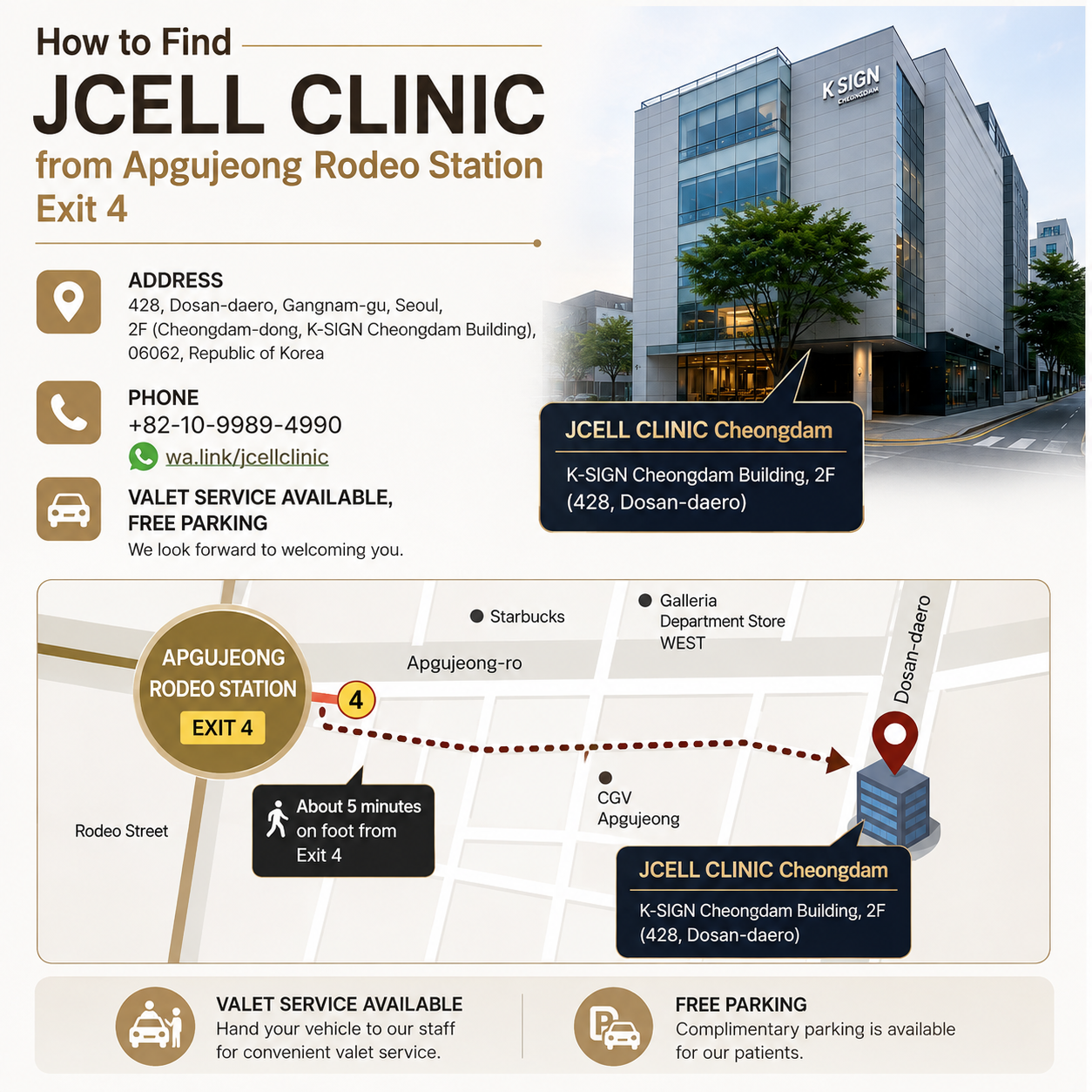
Cheongdam JCELL Dermatology Clinic is located near Apgujeong Rodeo Station Exit 4, making it convenient for patients traveling within Gangnam.
Who May Consider Skin Tag Removal in Cheongdam?
Professional dermatology consultation may be suitable for patients who:
- Have visible skin tags on the face or body
- Experience irritation from clothing
- Have skin tags around the neck or underarms
- Want to remove cosmetically bothersome growths
- Have multiple skin tags
- Experience irritation during shaving
- Want professional evaluation before removal
- Are unsure whether a growth is actually a skin tag
- Are visiting Seoul for dermatology treatment
- Prefer doctor-led skin lesion removal
Patients with unfamiliar, changing, or unusual growths should prioritize professional evaluation before choosing a cosmetic removal procedure.
Frequently Asked Questions
Are skin tags dangerous?
Most typical skin tags are benign and do not require removal for medical reasons. However, an unfamiliar or changing skin growth should be assessed by a dermatologist before assuming that it is a skin tag.
Can skin tags be removed with a laser?
Yes. Laser-assisted removal may be considered for selected skin tags. The appropriate technique depends on the lesion's size, location, and characteristics.
Can I remove several skin tags at once?
Multiple skin tags can be evaluated during the same consultation. Whether they can all be treated in one session depends on their number, size, location, and the selected treatment method.
Can facial skin tags be removed?
Yes. Selected facial skin tags can be removed after professional assessment. Because facial skin is highly visible, treatment planning should consider healing and potential post-treatment marks.
Will skin tag removal leave a scar?
The risk of a visible mark depends on the lesion, treatment method, location, skin type, and individual healing response. Your dermatologist can discuss realistic expectations before treatment.
How long does skin tag removal take to heal?
Healing varies depending on the size and location of the skin tag and the removal method used. The clinic can provide more specific recovery guidance after evaluating the lesion.
Can foreigners get skin tag removal in Cheongdam?
Yes. International visitors and foreign residents can seek professional skin tag evaluation and removal in Cheongdam. Cheongdam JCELL Dermatology Clinic provides English-friendly care for international patients.
Can skin tags grow back after removal?
A removed skin tag generally does not grow back in exactly the same spot, but new skin tags can develop elsewhere. Recurrence or the appearance of additional lesions can depend on individual factors.
Should I remove a skin tag at home?
It is generally safer to have an unfamiliar or bothersome skin growth evaluated and removed professionally rather than cutting, burning, or applying unverified products at home.
Can I travel after skin tag removal?
Travel may be possible depending on the procedure and location of the treated area. International patients should discuss their travel schedule with the clinic and allow sufficient time for initial healing and aftercare.
Skin Tag Removal in Cheongdam, Gangnam
Cheongdam JCELL Dermatology Clinic provides personalized dermatologic care for patients seeking skin tag removal in Cheongdam. Through professional lesion assessment and individualized treatment planning, patients can address concerns involving facial skin tags, neck and underarm skin tags, multiple lesions, and other cosmetically bothersome skin growths.
Depending on the characteristics of the lesion, treatment may involve laser-assisted removal, electrocautery, surgical excision, or another appropriate dermatologic technique. For international patients living in Korea or visiting Seoul,
Cheongdam JCELL Dermatology Clinic offers a convenient setting for professional skin tag evaluation and treatment in
Cheongdam, Gangnam.