Facial Mole Removal in Gangnam, Seoul
Cheongdam JCELL Dermatology Clinic
Receive precise facial mole removal at Cheongdam JCELL Dermatology Clinic in Gangnam, Seoul, with professional skin assessment and treatment approaches tailored to each mole’s size, location, and characteristics.
Facial moles are common skin features, but some patients may choose to remove them because of their appearance, location, size, or repeated irritation. Since facial moles can differ in pigmentation, depth, shape, and structure, professional evaluation is important before deciding which removal method is appropriate.
At Cheongdam JCELL Dermatology Clinic, patients receive personalized dermatology care in Cheongdam, Gangnam, Seoul. The clinic provides professional assessment and individualized treatment planning for facial moles, pigmented lesions, raised moles, and other selected benign skin concerns.
For international patients living in Korea or visiting Seoul, a dermatology consultation can help determine whether a facial mole is suitable for laser removal and provide guidance regarding treatment, healing, skincare, and aftercare.
What Is Facial Mole Removal?
Facial mole removal is a dermatologic procedure used to remove selected moles from visible areas of the face. Depending on the characteristics of the mole, treatment may involve laser removal or another dermatologic procedure.
Patients may consider facial mole removal because a mole is:
- Cosmetically bothersome
- Located in a highly visible area
- Raised or prominent
- Frequently irritated
- Caught during shaving
- Rubbing against glasses or masks
- Affecting facial appearance
- Changing in appearance
The appropriate treatment depends on the individual mole rather than simply its size or location.
A dermatologist should evaluate the mole before cosmetic removal to determine whether it is appropriate for laser treatment or another procedure.
Why Should Facial Moles Be Evaluated Before Removal?
A mole that looks simple on the surface may have characteristics that require closer examination. Facial lesions can also resemble other types of pigmented or benign skin growths.
Before treatment, a dermatologist may consider:
- Size
- Color
- Shape
- Border
- Depth
- Surface characteristics
- Location
- Changes over time
- Previous treatment
- Overall clinical appearance
If a mole appears unusual or suspicious, cosmetic laser removal may not be the appropriate first step.
Patients should particularly seek professional evaluation when a mole has recently changed in size, shape, color, or behavior.
Types of Facial Moles
Facial moles can vary considerably from patient to patient. Some are flat and lightly pigmented, while others are darker, raised, or deeper within the skin.
Common characteristics include:
- Flat moles
- Slightly raised moles
- Prominent raised moles
- Small pigmented moles
- Larger facial moles
- Multiple facial moles
- Moles with varying pigmentation
The appearance of a mole does not always indicate its depth. A small mole can extend deeper into the skin than it appears to on the surface.
Treatment planning should therefore be based on the characteristics of the individual lesion rather than appearance alone.
Personalized Facial Mole Consultation in Seoul
Every facial mole is different, and individualized consultation can help determine the most appropriate treatment approach.
During consultation, the dermatologist may ask:
- When you first noticed the mole
- Whether it has changed
- Whether it has become larger
- Whether its color has changed
- Whether it is flat or raised
- Whether it has previously been treated
- Whether it becomes irritated
- Why you want it removed
- Whether you have experienced scarring after previous procedures
The dermatologist may also assess the surrounding skin, skin type, pigmentation tendency, and overall healing characteristics.
For international patients, photographs showing how the mole looked previously can be helpful when discussing changes over time.
Facial Mole Removal at Cheongdam JCELL Dermatology Clinic
At Cheongdam JCELL Dermatology Clinic, facial mole removal is approached according to the characteristics of the individual lesion and the patient's treatment goals.
Depending on the mole, treatment planning may consider:
- Laser mole removal
- CO2 laser treatment
- Treatment of superficial lesions
- Treatment of selected raised moles
- Individualized treatment depth
- Staged treatment when appropriate
- Alternative removal methods when laser is unsuitable
CO2 Laser Facial Mole Removal
CO2 laser treatment may be considered for selected superficial or benign facial moles. The laser can precisely ablate targeted tissue while allowing the treatment area to be controlled.
Common treatment areas include:
- Forehead
- Cheeks
- Nose
- Chin
- Jawline
- Temples
- Around the mouth
- Eyebrow area
Because facial skin is highly visible, treatment planning should consider both appropriate removal and the potential for temporary redness, pigmentation changes, or scarring.
Laser Treatment for Small Facial Moles
Small facial moles are a common reason patients seek laser removal.
For selected lesions, laser treatment may provide a minimally invasive approach with a relatively straightforward recovery process.
However, the size of a mole alone does not determine whether laser treatment is suitable. Depth, structure, pigmentation, location, and clinical appearance are also important factors.
Treatment of Raised Facial Moles
Raised moles can be more noticeable and may sometimes become irritated by shaving, masks, glasses, or repeated friction.
Depending on their depth and structure, some raised moles may be suitable for laser treatment, while others may require a different dermatologic procedure.
A dermatologist can evaluate the lesion and explain the available options before treatment.
Facial Mole Removal & Different Skin Types
Skin type can influence the healing process following mole removal.
Patients with a tendency toward pigmentation may experience temporary or prolonged darkening after certain dermatologic procedures, particularly if the treated area receives significant sun exposure during healing.
Treatment planning may therefore consider:
- Natural skin tone
- Pigmentation tendency
- Skin sensitivity
- Previous laser reactions
- Treatment location
- Mole depth
- Expected healing
- Recent sun exposure
Patients should inform the dermatologist about previous procedures that caused prolonged redness or pigmentation changes.
This information can help the medical team select an appropriate treatment approach and provide more individualized aftercare recommendations.
Facial Mole Removal & Scarring
Scarring is one of the most common concerns among patients considering facial mole removal.
The final appearance of the treated area can depend on:
- Mole depth
- Treatment depth
- Mole size
- Treatment location
- Individual healing response
- Skin type
- Aftercare
- Sun exposure
- Previous scarring tendency
No mole removal procedure can guarantee completely scar-free healing.
For facial treatment, careful evaluation and appropriate treatment depth are particularly important because the treated area is highly visible.
Patients should also avoid picking, scratching, or unnecessarily touching the treated area while it heals.
Facial Mole Removal Recovery
Recovery varies according to the treatment method, mole characteristics, treatment depth, location, and individual skin response.
Temporary changes may include:
- Redness
- Mild swelling
- Sensitivity
- Crusting
- Scabbing
- Temporary pigmentation changes
Patients may be instructed to keep the area clean and protected while the skin heals.
Aftercare may include:
- Following wound-care instructions
- Avoiding picking or scratching
- Using recommended topical products
- Keeping the treated area protected
- Applying sun protection
- Avoiding unnecessary irritation
- Attending follow-up appointments when recommended
Allowing the skin to heal naturally is an important part of achieving the best possible cosmetic outcome.
Sun Protection After Facial Mole Removal
Sun exposure is particularly important after facial mole removal because recently treated skin can be more vulnerable to pigmentation changes.
During the healing period, patients may be advised to:
- Minimize direct sun exposure
- Use appropriate sun protection
- Avoid prolonged outdoor activities when possible
- Follow post-treatment skincare instructions
- Avoid irritating products on the treated area
This can be particularly important for international visitors who plan to spend significant time outdoors while traveling around Seoul.
Patients should discuss their planned activities with the clinic if they are scheduling treatment shortly before a trip, outdoor event, or vacation.
Can Every Facial Mole Be Removed With a Laser?
No. Laser treatment is not appropriate for every facial mole.
A dermatologist may recommend another approach when a mole is:
- Deep
- Large
- Significantly raised
- Clinically unusual
- Changing over time
- Difficult to assess
- Unsuitable for superficial laser removal
- Recurrent after previous treatment
Some deeper lesions may require a different removal method to address the lesion more completely.
If there is any concern about the nature of the lesion, medical evaluation should take priority over cosmetic removal.
Facial Mole Removal for International Patients in Seoul
International patients often consider facial mole removal while visiting Seoul for dermatology or aesthetic care. Because facial treatment can involve visible healing changes, travelers should consider their schedule carefully.
At Cheongdam JCELL Dermatology Clinic, international patients can discuss:
- Facial moles
- Multiple small moles
- Raised facial moles
- Pigmented lesions
- Previous mole removal
- Laser treatment suitability
- Expected downtime
- Wound care
- Sun protection
- Follow-up recommendations
The clinic provides international patient-friendly dermatology care in Cheongdam, making it convenient for visitors seeking professional facial mole evaluation and treatment in Seoul.
If you are traveling specifically for mole removal, it may be helpful to schedule treatment with sufficient time before major events, extensive outdoor activities, or a long flight.
When Should You See a Dermatologist Before Facial Mole Removal?
Professional evaluation is especially important when a facial mole appears to be changing.
Consider seeing a dermatologist if:
- The mole is growing rapidly
- Its shape has changed
- Its border has become irregular
- Its color has changed
- Multiple colors are visible
- It repeatedly bleeds
- It develops persistent crusting
- It becomes painful
- It remains itchy
- It looks noticeably different from your other moles
- You are unsure whether it is benign
These signs do not automatically mean that a mole is dangerous. However, they are reasons to seek medical evaluation before treating the lesion as a cosmetic concern.
What Happens During a Facial Mole Removal Appointment?
1. Consultation
Your mole concerns, medical history, previous treatments, and cosmetic goals are discussed.
2. Mole Assessment
The dermatologist evaluates the mole's size, shape, color, depth, location, and overall clinical appearance.
3. Treatment Planning
The dermatologist determines whether laser removal is appropriate and explains the expected treatment and recovery process.
4. Facial Mole Removal
If the lesion is considered suitable, the selected procedure is performed according to the individualized treatment plan.
5. Aftercare Guidance
You receive instructions regarding wound care, skincare, sun protection, recovery, and follow-up when necessary.
Why Choose Cheongdam for Facial Mole Removal?
Cheongdam is located in Gangnam, Seoul, and is recognized for its concentration of dermatology and aesthetic medical services.
Its location can be convenient for local residents as well as international visitors seeking professional dermatologic care.
Cheongdam is also accessible for patients staying around:
- Gangnam
- Apgujeong
- Sinsa
- COEX
- Samseong
- Seongsu
- Jamsil
- Itaewon
- Central Seoul
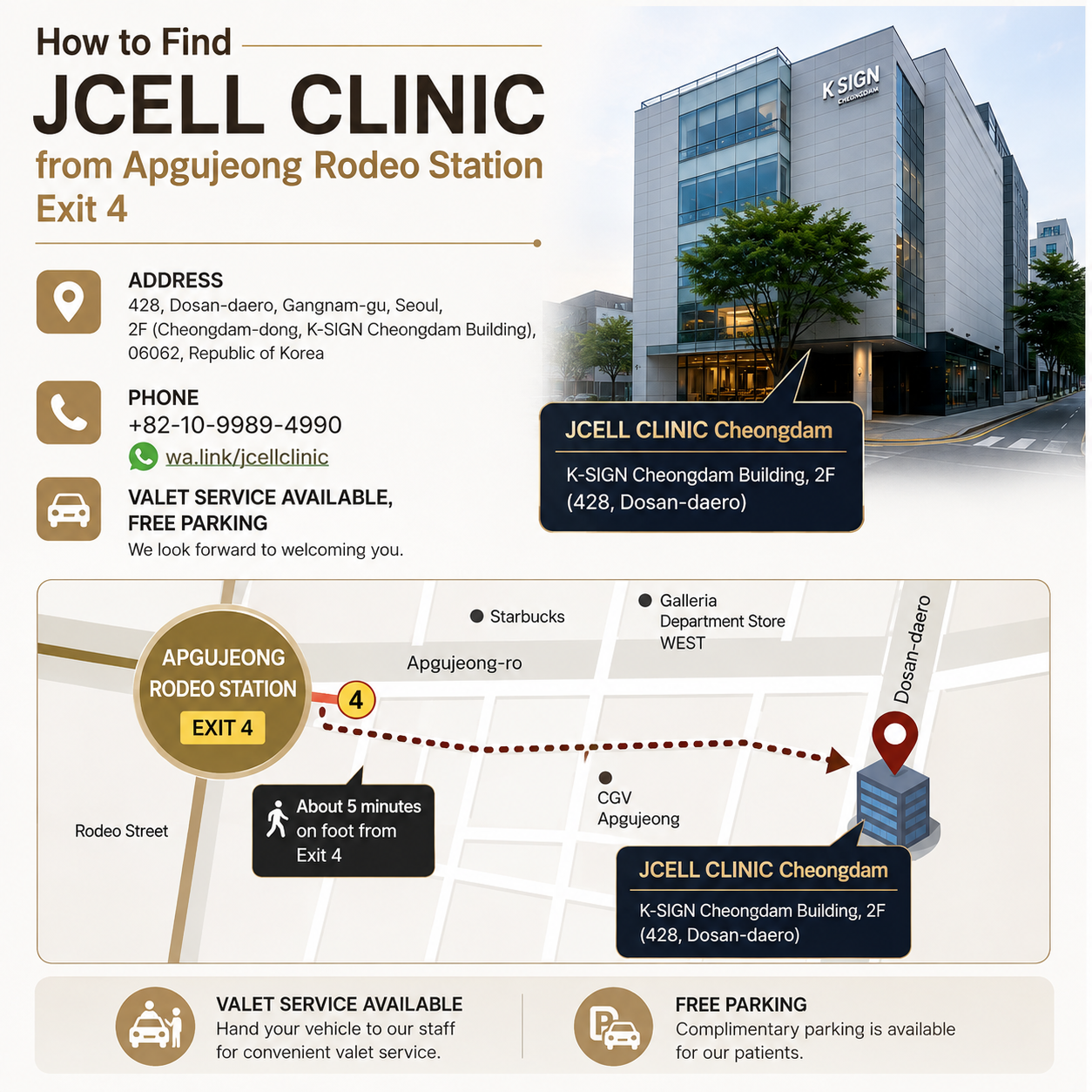
Cheongdam JCELL Dermatology Clinic is located at 428 Dosan-daero in Gangnam, near Apgujeong Rodeo Station Exit 4, providing convenient access for patients traveling within Seoul.
Who May Consider Facial Mole Removal in Seoul?
A facial mole removal consultation may be suitable for patients who:
- Have a cosmetically bothersome facial mole
- Want to remove a small facial mole
- Have a raised or prominent mole
- Experience irritation from a facial mole
- Have multiple facial moles
- Want professional evaluation before laser treatment
- Are concerned about facial appearance
- Have previously undergone mole removal
- Want to understand their treatment options
- Are visiting Seoul for dermatology treatment
- Prefer individualized treatment planning
Patients with changing or unusual moles should prioritize medical evaluation before choosing cosmetic removal.
Frequently Asked Questions
Can facial moles be removed with a laser?
Some facial moles may be suitable for laser removal after professional assessment. The appropriate method depends on the mole's depth, size, location, structure, and clinical appearance.
Is CO2 laser suitable for facial mole removal?
CO2 laser may be considered for selected superficial and benign moles. However, not every mole is suitable for CO2 laser treatment, so professional evaluation should come first.
Does facial mole removal hurt?
The level of discomfort varies according to the treatment area, mole characteristics, and individual sensitivity. Appropriate pain-control measures may be considered as part of the treatment process.
How long does facial mole removal take?
Treatment time depends on the number, size, depth, and type of moles being treated. A single small mole may require less treatment time than multiple or deeper lesions.
What does the skin look like after facial mole removal?
The treated area may temporarily appear red or sensitive and can develop crusting or scabbing during healing. The recovery process varies according to treatment depth and individual skin response.
Will facial mole removal leave a scar?
Any procedure that removes skin tissue can potentially leave a mark or scar. The outcome depends on the mole, treatment depth, location, skin type, healing response, and aftercare.
Can I wear makeup after facial mole removal?
You may need to avoid applying makeup directly over the treated area while it is healing. Follow the specific instructions provided by your dermatologist.
Can I go outside after facial mole removal?
You may be able to continue normal activities, but direct sun exposure should generally be minimized during healing. Appropriate sun protection is important for recently treated facial skin.
Can I travel after facial mole removal?
Travel may be possible depending on the treatment and recovery process. International patients should consider their flight schedule, outdoor activities, and expected healing when planning treatment.
Can a facial mole come back after removal?
Some moles can recur after treatment, particularly when deeper tissue remains. If a previously treated mole returns or changes, it should be reassessed by a dermatologist.
Can foreigners get facial mole removal in Seoul?
Yes. International visitors and foreign residents can seek professional facial mole evaluation and treatment in Seoul. Cheongdam JCELL Dermatology Clinic provides international patient-friendly dermatology care in Cheongdam.
Facial Mole Removal in Cheongdam, Gangnam
Cheongdam JCELL Dermatology Clinic provides personalized dermatologic care for patients seeking facial mole removal in Seoul. Through professional mole assessment and individualized treatment planning, patients can address concerns involving small facial moles, raised moles, pigmented lesions, and other selected benign skin concerns.
Depending on the characteristics of the mole, treatment may involve CO2 laser removal or another appropriate dermatologic procedure. For international patients living in Korea or visiting Seoul,
Cheongdam JCELL Dermatology Clinic offers a convenient setting for professional facial mole evaluation and treatment in
Cheongdam, Gangnam.