Broken Capillaries Treatment in Gangnam, Seoul
Cheongdam JCELL Dermatology Clinic
Receive targeted care for broken capillaries at Cheongdam JCELL Dermatology Clinic in Gangnam, Seoul, with personalized vascular treatments designed to reduce visible facial vessels and persistent redness.
Broken capillaries are small visible blood vessels that appear close to the surface of the skin. They are commonly noticed around the nose, cheeks, chin, and other visible areas of the face, where they can create persistent redness or an uneven complexion.
At Cheongdam JCELL Dermatology Clinic, patients receive personalized dermatology care in Cheongdam, Gangnam, Seoul. Treatment planning for broken capillaries is based on the location, size, appearance, and characteristics of the visible vessels, as well as the patient's overall skin condition.
For international patients living in Korea or visiting Seoul, professional evaluation can help determine whether vascular laser treatment is appropriate and which treatment approach may be suitable for their individual skin.
What Are Broken Capillaries?
Broken capillaries are small blood vessels that become visible near the surface of the skin. They are often described medically as telangiectasia and can appear as fine red lines, branching vessels, or small areas of localized redness.
They may be especially noticeable on the face because facial skin is frequently exposed to sunlight, temperature changes, skincare products, and other environmental factors.
Common appearances include:
- Fine red lines
- Small branching vessels
- Tiny visible red vessels
- Redness around the nose
- Visible vessels across the cheeks
- Localized facial redness
- Small clusters of superficial vessels
Some people have only a few visible vessels, while others may develop more widespread facial redness.
Broken capillaries are often considered a cosmetic concern, but visible blood vessels can also occur alongside dermatologic conditions such as rosacea.
Professional assessment is therefore useful for determining whether the concern is isolated visible vessels or part of a broader skin condition.
What Causes Visible Facial Capillaries?
A number of factors can contribute to the development or increased visibility of facial blood vessels.
Possible contributing factors include:
- Sun exposure
- Skin aging
- Repeated facial flushing
- Rosacea
- Skin sensitivity
- Environmental temperature changes
- Previous skin inflammation
- Genetic tendency
- Repeated irritation
- Certain lifestyle factors
Long-term sun exposure can contribute to changes in the skin and make small facial vessels more noticeable.
Repeated flushing may also contribute to persistent redness and visible vessels in some individuals.
People with sensitive or reactive skin may notice that their facial redness becomes more prominent after heat, cold, exercise, skincare products, or other triggers.
The cause is not always the same for every patient.
Understanding why the vessels are visible can help determine whether vascular laser treatment alone is appropriate or whether additional dermatologic care may be needed.
Where Do Broken Capillaries Commonly Appear?
Broken capillaries can occur on different areas of the body, but facial vessels are among the most common cosmetic concerns.
Typical facial locations include:
- Cheeks
- Sides of the nose
- Around the nostrils
- Chin
- Lower cheeks
- Around the mouth
- Other visible facial areas
The nose is a particularly common area because superficial vessels around the nostrils can become noticeable against the surrounding skin.
Cheek capillaries may appear as individual fine lines or as a more diffuse pattern of redness.
The number and size of visible vessels can also vary significantly.
A patient with several small vessels in one area may require a different treatment strategy from someone with widespread facial redness.
Treatment planning should therefore consider the entire vascular pattern rather than focusing only on the most visible vessel.
Broken Capillaries and Facial Redness
Visible capillaries can contribute to an overall red or flushed appearance.
However, not all facial redness is caused by visible blood vessels.
Redness can also be associated with:
- Rosacea
- Acne inflammation
- Dermatitis
- Skin irritation
- Sun exposure
- Post-inflammatory redness
- Sensitive skin
- Environmental triggers
This distinction matters when choosing a treatment.
For example, a patient with isolated superficial vessels may be an appropriate candidate for vascular laser treatment. Someone with active dermatitis may need to address the underlying irritation before undergoing a laser procedure.
Similarly, rosacea can involve persistent redness, flushing, inflammation, and visible blood vessels at the same time.
During consultation, the dermatologist can evaluate the skin to determine whether vascular changes are the primary concern.
Vascular Laser Treatment for Broken Capillaries
Vascular laser treatment is commonly considered for visible superficial blood vessels.
The laser delivers controlled energy that is absorbed by components within the targeted blood vessels. The resulting thermal effect can selectively affect the vessel while limiting unnecessary exposure to surrounding tissue.
The body can then gradually process the treated vascular structures.
Vascular laser treatment may be considered for:
- Facial capillaries
- Visible blood vessels
- Localized facial redness
- Redness around the nose
- Cheek vessels
- Rosacea-related vessels
- Selected vascular lesions
Different vascular laser technologies can be used depending on the characteristics of the vessels.
The appropriate wavelength and treatment parameters can vary according to vessel size, depth, color, location, skin tone, and individual sensitivity.
There is no single laser setting that is appropriate for every patient.
A dermatologist should determine the appropriate treatment approach after evaluating the skin and vascular concern.
Broken Capillaries Treatment at Cheongdam JCELL Dermatology Clinic
At Cheongdam JCELL Dermatology Clinic, patients can receive an individualized assessment before treatment for visible facial vessels.
The dermatologist may consider:
- Number of visible capillaries
- Vessel size
- Vessel depth
- Treatment location
- Degree of surrounding redness
- Skin tone
- Skin sensitivity
- Pigmentation tendency
- Previous laser treatments
- Previous treatment reactions
- Current skin condition
Some patients may have only a few vessels around the nose.
Others may have numerous small vessels across the cheeks or central face.
These different patterns can require different treatment strategies.
Treatment for Cheek Capillaries
Cheek capillaries may appear as fine individual lines or as a more diffuse network of superficial vessels.
Vascular laser treatment can be considered when visible vessels are an important contributor to the redness.
The treatment area may be limited to the most noticeable vessels or adjusted according to the overall distribution of redness.
Treatment Around the Nose
Visible vessels around the nose are another common reason patients seek treatment.
They may appear:
- Along the sides of the nose
- Around the nostrils
- Across the upper nose
- On nearby cheek areas
Because this area is highly visible and can be sensitive, treatment should be carefully planned according to the vessel characteristics and surrounding skin.
Broken Capillaries and Rosacea
Rosacea is one of the conditions that can involve both facial redness and visible blood vessels.
Patients with rosacea may experience:
- Persistent facial redness
- Recurrent flushing
- Visible capillaries
- Burning
- Stinging
- Skin sensitivity
- Inflammatory bumps
Vascular laser treatment may be considered when visible blood vessels or vascular redness are prominent.
However, laser treatment does not necessarily address every feature of rosacea.
Depending on the patient's condition, broader management may include:
- Dermatologic evaluation
- Medical treatment
- Gentle skincare
- Skin-barrier support
- Trigger management
- Sun protection
- Vascular laser treatment
Patients with rosacea may experience periods of improvement and worsening over time.
Treating visible vessels can improve the vascular component while ongoing management may be needed for the underlying condition.
Broken Capillaries and Sensitive Skin
Patients with visible capillaries often describe their skin as sensitive, easily flushed, or reactive.
Sensitive skin may become more noticeable after:
- Heat
- Cold weather
- Sun exposure
- Hot showers
- Exercise
- Skincare products
- Exfoliation
- Friction
Before laser treatment, the dermatologist may evaluate whether the skin is currently calm enough for the procedure.
Patients should mention any recent:
- Chemical exfoliation
- Retinoid use
- Strong skincare ingredients
- Laser treatments
- Skin irritation
- Allergic reactions
- Excessive sun exposure
If the skin is significantly irritated, treatment may need to be postponed or adjusted.
Treating visible vessels while the surrounding skin is highly inflamed or compromised may not be the ideal approach.
Treatment Process and Recovery
The exact treatment process depends on the vascular laser selected and the individual patient's skin condition.
A typical appointment may include:
1. Skin Assessment
The dermatologist evaluates the visible capillaries, surrounding redness, skin tone, sensitivity, and overall condition of the treatment area.
2. Treatment Planning
The treatment area and appropriate laser parameters are selected according to the size, depth, and appearance of the vessels.
3. Vascular Laser Treatment
Controlled laser pulses are delivered to the selected vascular areas.
4. Cooling or Soothing Care
Cooling or soothing measures may be used depending on the treatment method and skin response.
5. Aftercare Guidance
Patients receive instructions regarding skincare, sun protection, heat exposure, and recovery.
Recovery After Treatment
Recovery varies according to the treatment intensity, number of vessels treated, laser technology, and individual response.
Temporary effects may include:
- Redness
- Warmth
- Mild swelling
- Sensitivity
- Temporary darkening of vessels
- Small red or purple spots
- Bruising
Some patients experience little visible downtime.
Others may have more noticeable temporary changes, particularly after treatment of larger or more numerous vessels.
After treatment, patients may be advised to:
- Use gentle skincare
- Keep the skin moisturized
- Avoid unnecessary friction
- Avoid harsh exfoliation
- Protect the skin from sunlight
- Avoid excessive heat
- Follow the clinic's specific aftercare instructions
The expected recovery period should be considered when scheduling treatment around work, travel, or important events.
How Many Treatments Are Needed?
The number of sessions required varies from patient to patient.
Factors that may influence the treatment schedule include:
- Number of visible vessels
- Vessel size
- Vessel depth
- Degree of facial redness
- Underlying rosacea
- Treatment settings
- Skin sensitivity
- Individual response
Some patients may notice improvement after an initial treatment.
Others may require several sessions to address more widespread or persistent vascular concerns.
Small superficial vessels may respond differently from larger or deeper vessels.
Patients with rosacea may also require ongoing treatment because new redness or visible vessels can develop over time.
There is no fixed number of sessions that applies to everyone.
Treatment intervals should be determined according to the patient's response and the condition of the skin after each procedure.
Sun Protection and Long-Term Care
Sun protection is an important part of managing visible facial vessels.
Recently treated skin can be more sensitive to sunlight, and significant sun exposure may increase irritation or the risk of unwanted pigmentation.
Patients may be advised to:
- Minimize direct sunlight
- Use appropriate sunscreen
- Wear a hat outdoors
- Avoid prolonged outdoor exposure
- Follow recommended skincare instructions
Long-term skin care can also be helpful for patients who are prone to redness or visible vessels.
Depending on the individual, it may be useful to avoid unnecessary irritation and identify personal flushing triggers.
Potential triggers can include:
- Excessive heat
- Sudden temperature changes
- Spicy foods
- Alcohol
- Intense exercise
- Hot showers
- Prolonged sun exposure
Not every trigger affects every person.
Patients with rosacea may benefit from identifying which factors consistently worsen their symptoms.
Laser treatment can address visible vessels, while appropriate daily care may help support longer-term skin management.
Broken Capillaries Treatment for International Patients in Seoul
International patients may seek treatment for visible facial capillaries while visiting Seoul or living in Korea.
At Cheongdam JCELL Dermatology Clinic, international patients can discuss:
- Facial capillaries
- Redness around the nose
- Cheek vessels
- Rosacea-related redness
- Facial flushing
- Sensitive skin
- Previous vascular treatments
- Expected downtime
- Aftercare
- Follow-up recommendations
A professional consultation can help patients understand whether their concern is primarily vascular or whether another skin condition may also be contributing.
Travel schedules should be considered before treatment.
Patients who have important events, long flights, or extensive outdoor activities may want to allow sufficient time for possible redness, swelling, or bruising to settle.
For visitors with limited time in Seoul, discussing the expected recovery period during the consultation can help with treatment scheduling.
When Should You See a Dermatologist for Broken Capillaries?
A professional dermatology consultation may be appropriate if visible facial vessels are becoming increasingly noticeable or are accompanied by persistent redness.
Consider an evaluation if you:
- Have visible capillaries around the nose
- Notice red vessels across the cheeks
- Experience frequent facial flushing
- Have persistent facial redness
- Suspect rosacea
- Have redness that does not improve with skincare
- Have sensitive or reactive skin
- Have previously reacted to laser treatment
- Are unsure which laser is appropriate
- Want professional treatment for visible blood vessels
Medical evaluation is especially important when redness is accompanied by burning, stinging, inflammatory bumps, persistent irritation, or other changes.
These symptoms may indicate that an underlying dermatologic condition should also be addressed.
Not every red area should automatically be treated as a broken capillary.
A dermatologist can first determine the likely cause before recommending an appropriate treatment.
Why Choose Cheongdam for Broken Capillaries Treatment?
Cheongdam is located in Gangnam, Seoul, and is well known for its concentration of dermatology and aesthetic medical services.
The area is convenient for both local residents and international visitors seeking professional skin care.
Patients staying in nearby areas can also access Cheongdam from:
- Gangnam
- Apgujeong
- Sinsa
- COEX
- Samseong
- Seongsu
- Jamsil
- Itaewon
- Central Seoul
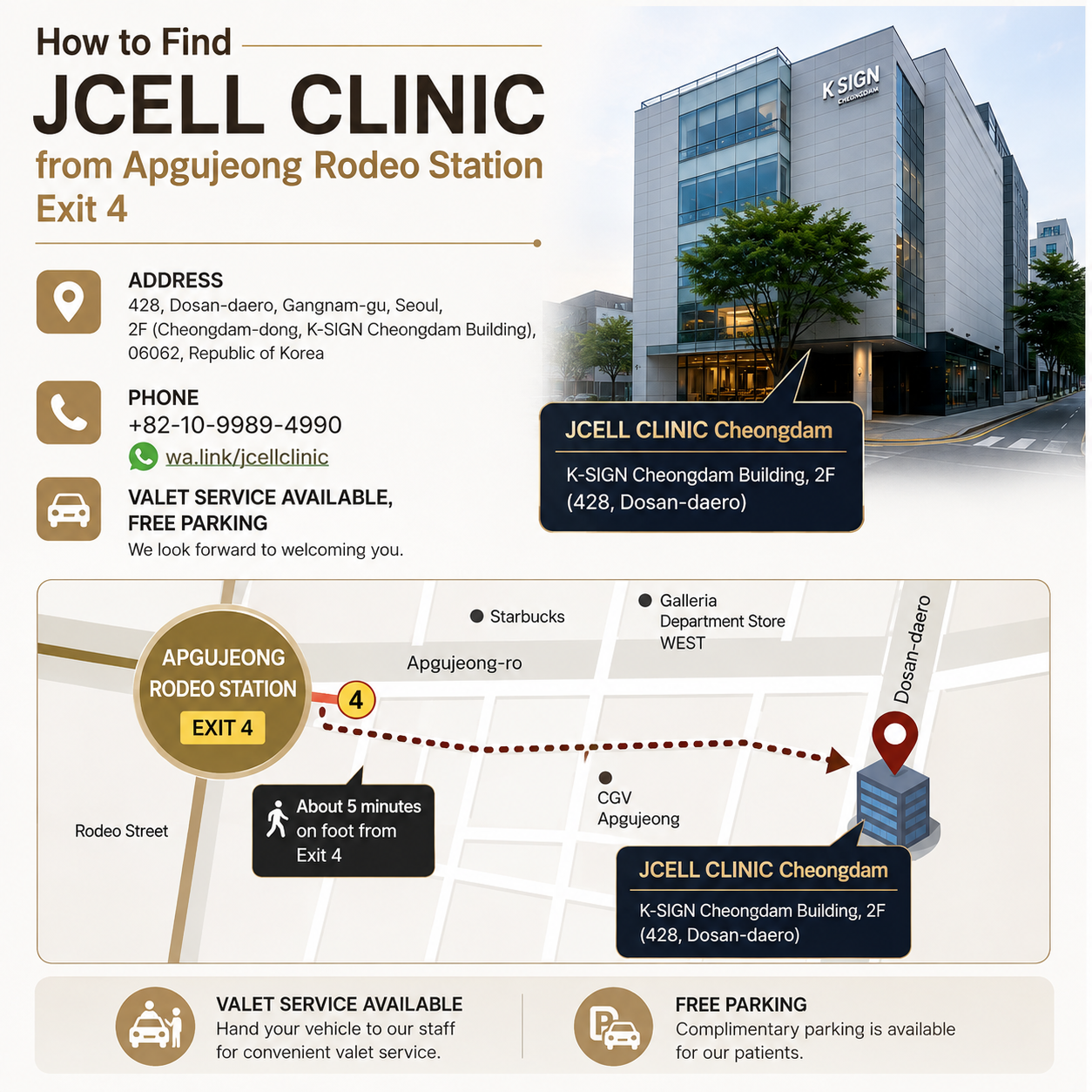
Cheongdam JCELL Dermatology Clinic is located at 428 Dosan-daero in Gangnam, near Apgujeong Rodeo Station Exit 4.
This provides convenient access for patients traveling within Seoul for dermatology care.
Who May Consider Broken Capillaries Treatment in Seoul?
A consultation may be suitable for patients who:
- Have visible facial capillaries
- Notice small red vessels around the nose
- Have prominent cheek vessels
- Experience persistent facial redness
- Have frequent flushing
- Have rosacea-related blood vessels
- Want to improve an uneven-looking complexion
- Have sensitive or reactive skin
- Have tried skincare without sufficient improvement
- Are considering vascular laser treatment
- Want professional assessment before choosing a procedure
- Are visiting Seoul for dermatology treatment
Patients with sudden or unexplained changes in their skin should seek professional evaluation before assuming the concern is purely cosmetic.
Frequently Asked Questions
What are broken capillaries on the face?
Broken capillaries are small visible blood vessels located close to the surface of the skin. They can appear as fine red lines, branching vessels, or localized areas of redness, particularly around the nose and cheeks.
Can broken capillaries be removed with a laser?
Selected visible capillaries can be treated with vascular laser procedures. Treatment suitability depends on the size, depth, location, and characteristics of the vessels.
What laser is used for broken capillaries?
Different vascular lasers may be considered depending on the individual concern. Pulsed dye lasers and other vascular laser technologies can be used for selected visible blood vessels.
Is broken capillary laser treatment painful?
Patients may experience warmth, tingling, or brief snapping sensations during treatment. The level of discomfort varies depending on the treatment area, laser settings, and individual sensitivity.
Does broken capillary treatment have downtime?
Some patients experience minimal downtime, while others may have temporary redness, swelling, sensitivity, darkening of treated vessels, or bruising. Recovery depends on the treatment settings and individual response.
How many treatments are needed for broken capillaries?
The number of sessions varies according to the number, size, depth, and type of vessels. Some patients may notice improvement after one treatment, while others may require multiple sessions.
Can broken capillaries come back after laser treatment?
Treated vessels may become less visible, but new vessels can develop over time. Rosacea, repeated flushing, sun exposure, and individual skin characteristics can influence future vascular changes.
Can V-Beam treat broken capillaries?
V-Beam is a pulsed dye laser that can be considered for selected visible blood vessels. It may be particularly useful when superficial vascular changes contribute to facial redness.
Are broken capillaries the same as rosacea?
No. Broken capillaries refer to visible blood vessels, while rosacea is a broader dermatologic condition that can include persistent redness, flushing, visible vessels, and other symptoms.
Can sensitive skin receive vascular laser treatment?
Potentially. Sensitive skin should be assessed before treatment, and laser parameters may need to be adjusted according to the patient's current skin condition.
Can I get broken capillary treatment while visiting Seoul?
Yes. International visitors can seek professional evaluation and vascular laser treatment in Seoul. Treatment timing should take recovery, sun exposure, and travel plans into consideration.
Can foreigners receive broken capillary treatment in Cheongdam?
Yes. International residents and visitors can seek dermatology care at Cheongdam JCELL Dermatology Clinic for visible capillaries, facial redness, and related vascular concerns.
Broken Capillaries Treatment in Cheongdam, Gangnam
Cheongdam JCELL Dermatology Clinic provides personalized dermatology care for patients seeking broken capillaries treatment in Seoul. Through professional skin and vascular assessment, patients can receive individualized treatment planning for visible facial vessels, localized redness, cheek capillaries, and vascular concerns around the nose.
Vascular laser treatment may be considered depending on the characteristics of the blood vessels and the patient's overall skin condition. For international patients living in Korea or visiting Seoul,
Cheongdam JCELL Dermatology Clinic offers a convenient setting for professional evaluation and treatment in
Cheongdam, Gangnam.