Facial Redness Treatment in Gangnam, Seoul
Cheongdam JCELL Dermatology Clinic
Address facial redness at Cheongdam JCELL Dermatology Clinic in Gangnam, Seoul, with personalized dermatology care designed to calm visible redness and improve overall skin tone and comfort.
Facial redness can appear as temporary flushing, persistent redness, visible small blood vessels, or irritation accompanied by burning and sensitivity. While occasional redness can be a normal response to heat, exercise, or environmental changes, ongoing redness may be associated with sensitive skin, inflammation, rosacea, or vascular changes.
At Cheongdam JCELL Dermatology Clinic, patients receive personalized dermatology care in Cheongdam, Gangnam, Seoul. The clinic provides professional evaluation and individualized treatment planning for facial redness, sensitive skin, visible blood vessels, post-acne redness, and related skin concerns.
For international patients living in Korea or visiting Seoul, a professional consultation can help identify possible causes of facial redness and determine whether medical care, skincare management, laser treatment, or a combination approach may be appropriate.
What Causes Facial Redness?
Facial redness can have many different causes, and the appearance of redness alone does not always indicate the underlying problem.
Common contributing factors may include:
- Sensitive or reactive skin
- Rosacea
- Contact dermatitis
- Atopic dermatitis
- Skin inflammation
- Visible or dilated blood vessels
- Acne-related inflammation
- Post-inflammatory redness
- Sun exposure
- Heat or sudden temperature changes
- Stress
- Irritating skincare products
- Certain foods or beverages in some individuals
Because similar redness can result from very different conditions, identifying the underlying cause is an important first step before selecting treatment.
Persistent Facial Redness in Cheongdam
Some patients experience redness that remains visible even when there is no obvious trigger. Others may notice repeated flushing that gradually becomes more frequent or intense.
Persistent redness may appear around the:
- Cheeks
- Nose
- Chin
- Forehead
- Jawline
- Area around the mouth
Patients may also experience:
- Burning
- Stinging
- Itching
- Dryness
- Skin sensitivity
- Warmth
- Visible small blood vessels
- Recurrent flushing
When redness continues for an extended period or repeatedly returns, a dermatologist can evaluate whether inflammation, rosacea, vascular changes, or another skin condition may be contributing.
Personalized Facial Redness Consultation
Every patient's facial redness can have a different pattern. Some people mainly experience visible blood vessels, while others have redness associated with sensitivity, inflammation, or recurring flushing.
During consultation, the dermatologist may evaluate:
- When the redness began
- Whether it is constant or intermittent
- Areas where redness appears
- Possible triggers
- Skin sensitivity
- Burning or stinging
- Visible capillaries
- Current skincare products
- Previous dermatologic treatments
- Recent sun exposure
- Overall skin-barrier condition
Patients may also be asked whether redness becomes worse after heat, exercise, alcohol, spicy foods, stress, or changes in temperature.
This information can help guide a treatment plan based on the patient's individual symptoms rather than treating all facial redness in the same way.
Facial Redness Treatment at Cheongdam JCELL Dermatology Clinic
At Cheongdam JCELL Dermatology Clinic, treatment is selected according to the cause and characteristics of the patient's facial redness. Depending on the situation, treatment may involve vascular laser procedures, calming care, medical management, or a combination of approaches.
Vascular Laser Treatment
Vascular-focused laser treatment may be considered when visible blood vessels or vascular redness are a significant part of the patient's concern.
It may be used for selected concerns such as:
- Persistent facial redness
- Visible capillaries
- Broken blood vessels
- Facial flushing
- Rosacea-related redness
- Localized vascular redness
- Post-inflammatory redness
The appropriate laser and treatment parameters depend on the patient's skin condition and vascular characteristics.
Calming & Barrier Care
Not every patient with facial redness needs an aggressive laser procedure.
For patients with sensitive, irritated, or weakened skin, treatment may instead focus on:
- Reducing irritation
- Supporting the skin barrier
- Improving hydration
- Calming inflammation
- Reviewing irritating skincare products
- Protecting the skin from environmental triggers
Strengthening the skin's overall condition can be an important part of managing recurring redness.
Medical Dermatology Treatment
When facial redness is associated with an inflammatory dermatologic condition, medical treatment may be considered according to the diagnosis.
Conditions that can involve facial redness include:
- Rosacea
- Contact dermatitis
- Atopic dermatitis
- Other inflammatory skin conditions
Accurate diagnosis is important because treating inflammation and treating visible blood vessels may require different strategies.
Combination Treatment
Some patients may have more than one contributing factor. For example, a patient may have both visible capillaries and sensitive skin or experience rosacea-related inflammation together with persistent vascular redness.
In such cases, treatment may combine:
- Medical management
- Vascular laser treatment
- Skin-barrier care
- Gentle skincare
- Anti-inflammatory approaches
- Personalized follow-up
Laser Treatment for Facial Redness
Laser treatment can be considered for certain types of persistent redness, particularly when visible blood vessels or vascular changes are involved.
Depending on the patient's condition, vascular laser treatment may focus on:
- Dilated superficial blood vessels
- Broken capillaries
- Diffuse facial redness
- Localized redness
- Rosacea-related vascular changes
- Red marks left after inflammation
Treatment settings should be adjusted according to the skin type, redness pattern, vessel characteristics, treatment area, and individual sensitivity.
More intensive treatment is not necessarily better, especially for patients with reactive or easily irritated skin.
A dermatologist can determine whether laser treatment is appropriate and how it should be incorporated into the overall treatment plan.
Facial Redness & Sensitive Skin
Sensitive skin can become red easily in response to skincare products, friction, temperature changes, dryness, or environmental conditions.
Patients with sensitive skin may notice:
- Redness after cleansing
- Burning after skincare products
- Stinging sensations
- Tightness
- Dryness
- Flushing
- Increased reaction to weather changes
- Irritation after cosmetic procedures
Before treatment, the dermatologist may evaluate the current condition of the skin barrier and identify factors that may be worsening the redness.
Treatment may then emphasize gentle, individualized care rather than unnecessary procedures.
Patients should also inform the dermatologist about active skincare ingredients, recent exfoliation, previous laser treatments, and products that have caused irritation in the past.
Facial Redness Related to Rosacea
Rosacea is one possible cause of persistent facial redness and may involve flushing, visible blood vessels, burning, stinging, and increased skin sensitivity.
Rosacea-related redness commonly affects:
- Cheeks
- Nose
- Chin
- Central face
Some patients may also develop acne-like inflammatory bumps or recurring flare-ups.
Treatment planning may consider:
- Frequency of flushing
- Persistent redness
- Visible blood vessels
- Inflammatory symptoms
- Skin sensitivity
- Possible triggers
- Previous treatment response
Because rosacea can involve both vascular and inflammatory components, treatment may require more than a single procedure.
Post-Acne Facial Redness
Acne can leave behind red or pink marks even after active breakouts have improved. These marks are not necessarily the same as brown pigmentation or permanent acne scars.
A dermatologist can evaluate whether the remaining concern is primarily:
- Post-acne redness
- Pigmentation
- Active inflammation
- Acne scarring
- Visible superficial blood vessels
When vascular redness is a significant component, laser treatment may be considered. If inflammation or another skin condition is contributing, medical or skincare management may also be appropriate.
The treatment approach should therefore be based on the actual type of mark rather than assuming that all post-acne discoloration requires the same procedure.
Facial Redness Treatment & Skin Tone
Persistent redness can make the complexion appear uneven even when other pigmentation concerns are minimal.
Treatment planning may address:
- Uneven facial tone
- Diffuse redness
- Localized red areas
- Visible capillaries
- Post-inflammatory redness
- Redness around the nose
- Red cheeks
Improving visible redness can create a more even-looking complexion, but treatment should focus on the underlying cause rather than simply attempting to change the skin's overall color.
Patients with pigmentation concerns in addition to redness may require a more carefully balanced treatment plan.
Recovery After Facial Redness Treatment
Recovery depends on the type of treatment used, treatment intensity, treatment area, and individual skin response.
After vascular laser treatment, temporary effects may include:
- Mild redness
- Warmth
- Swelling
- Sensitivity
- Temporary flushing
- Bruising or purpura with certain settings
Patients receiving gentler treatments may experience minimal downtime, while more intensive vascular procedures can result in more noticeable temporary changes.
After treatment, patients may be advised to:
- Use gentle skincare
- Keep the skin moisturized
- Apply sun protection
- Avoid excessive heat
- Avoid unnecessary friction
- Avoid harsh exfoliation
- Follow individualized aftercare instructions
Patients with reactive skin should pay particular attention to changes in irritation during the recovery period.
Facial Redness Treatment for International Patients in Seoul
International patients may seek facial redness treatment while living in Korea or visiting Seoul. Because treatment and recovery can vary, travelers should consider their schedule when planning dermatologic procedures.
At Cheongdam JCELL Dermatology Clinic, international patients can discuss:
- Persistent facial redness
- Facial flushing
- Visible capillaries
- Rosacea-related redness
- Sensitive or reactive skin
- Post-acne redness
- Previous laser treatments
- Current skincare routines
- Expected downtime
- Aftercare
- Follow-up recommendations
The clinic provides international patient-friendly dermatology care in Cheongdam, making it convenient for visitors seeking professional evaluation and treatment in Seoul.
If you are traveling specifically for facial redness treatment, it may be useful to bring photographs of previous flare-ups, a list of skincare products, and information about previous procedures.
When Should You See a Dermatologist for Facial Redness?
Occasional flushing can be normal, but persistent or recurring redness may deserve professional evaluation.
Consider scheduling a dermatology consultation when:
- Facial redness persists
- Flushing occurs frequently
- Redness is becoming more noticeable
- The cheeks or nose remain red
- Small blood vessels become visible
- Your face frequently feels hot
- Skin burns or stings
- Skincare products repeatedly cause irritation
- Redness occurs with itching or inflammation
- Previous treatments have not helped
Professional evaluation can help distinguish between vascular redness, inflammation, sensitive skin, rosacea, dermatitis, and other possible causes.
What Happens During a Facial Redness Treatment Appointment?
1. Consultation
Your main concerns, symptoms, treatment history, skincare routine, and aesthetic goals are discussed.
2. Skin Assessment
The dermatologist examines the distribution and characteristics of your redness, including visible vessels, inflammation, sensitivity, and overall skin condition.
3. Cause & Treatment Planning
The dermatologist determines whether the redness appears primarily vascular, inflammatory, sensitivity-related, or associated with another dermatologic concern.
4. Personalized Treatment
If treatment is appropriate, the selected laser, medical care, skincare program, or combination approach is performed according to your individual plan.
5. Aftercare Guidance
You receive instructions regarding skincare, sun protection, heat exposure, recovery, and follow-up when necessary.
Why Choose Cheongdam for Facial Redness Treatment?
Cheongdam is located in Gangnam, Seoul, and is recognized for its concentration of dermatology and aesthetic medical services.
Its location can be convenient for both local residents and international visitors seeking professional dermatologic care.
Cheongdam is also accessible for patients staying around:
- Gangnam
- Apgujeong
- Sinsa
- COEX
- Samseong
- Seongsu
- Jamsil
- Itaewon
- Central Seoul
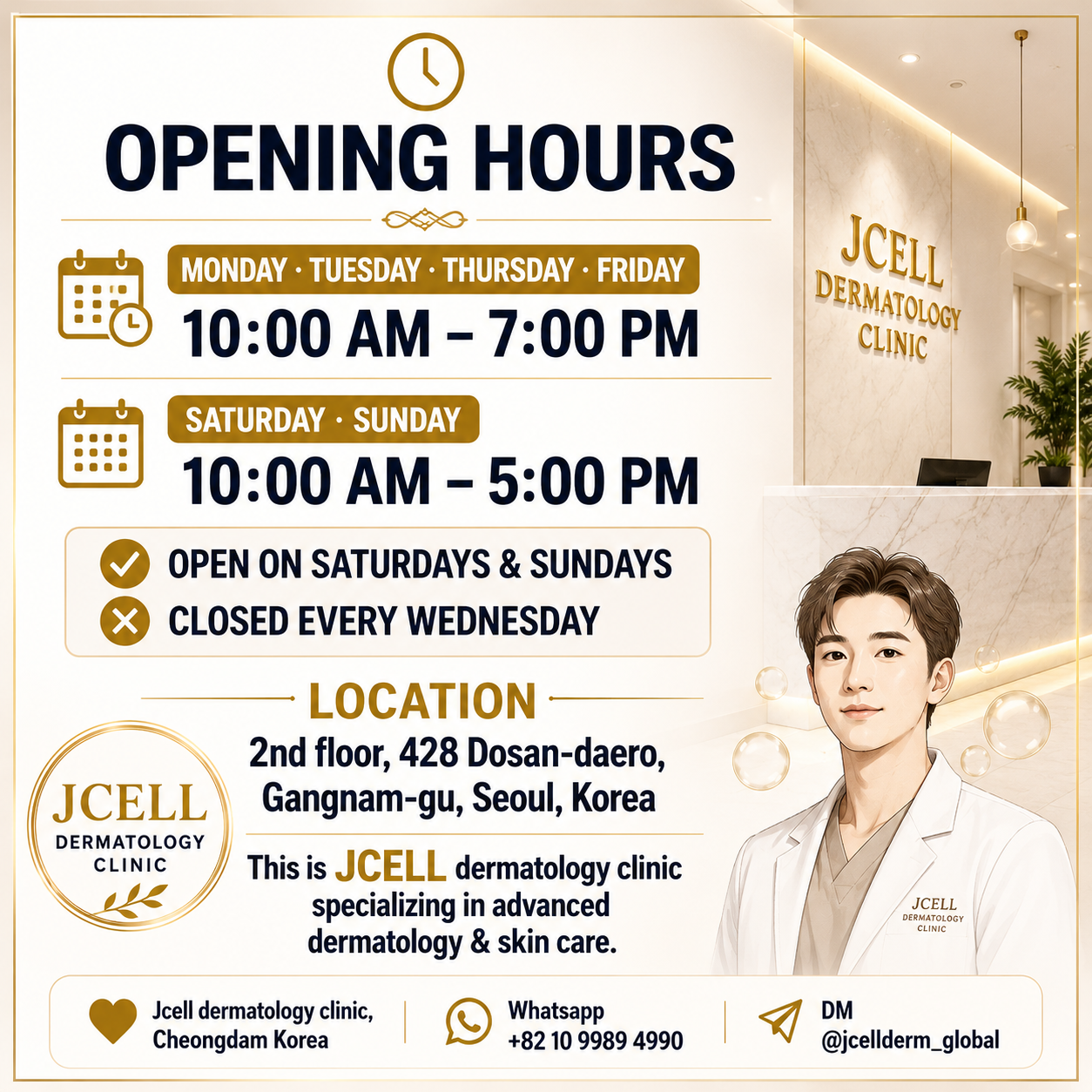
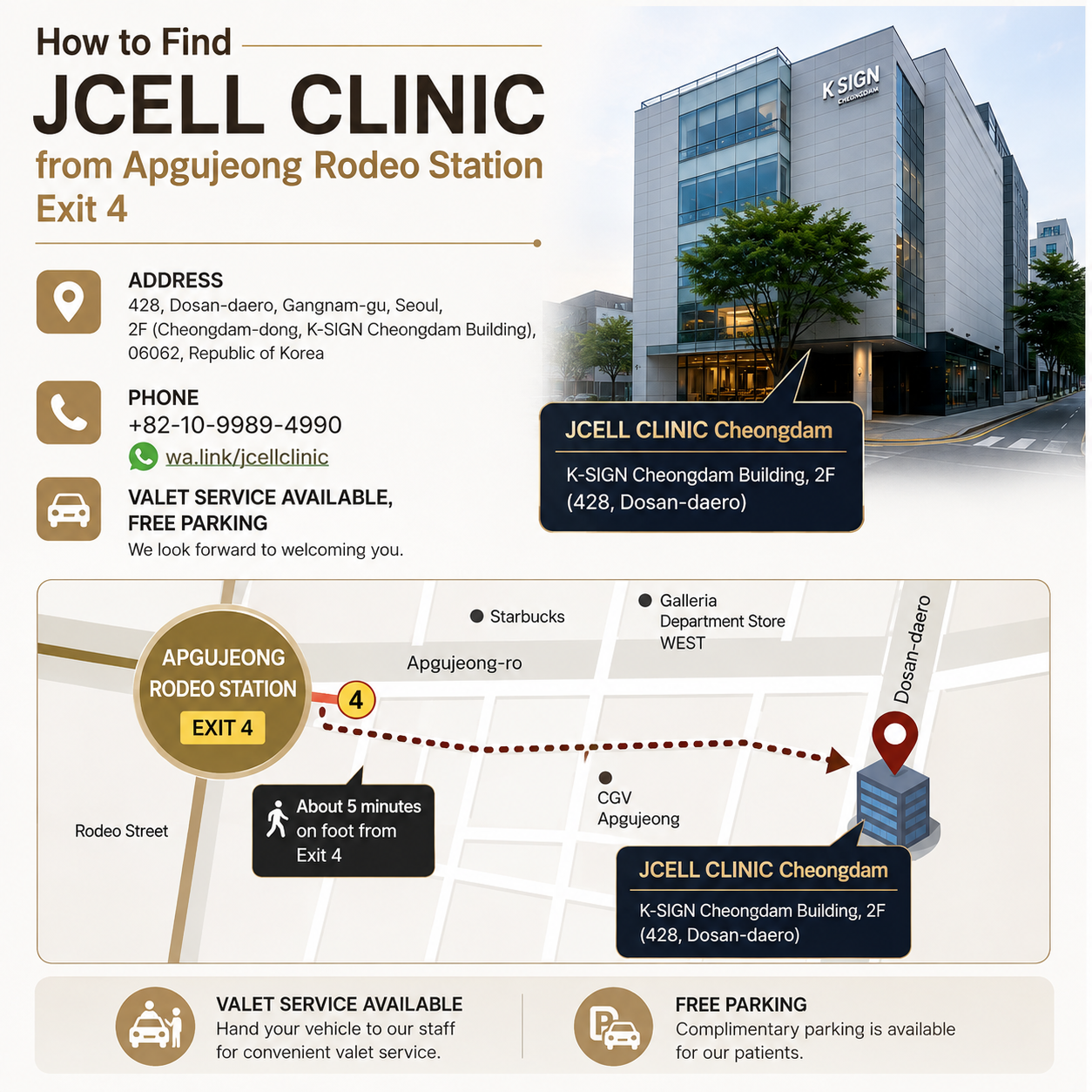
Cheongdam JCELL Dermatology Clinic is located at 428 Dosan-daero in Gangnam, near Apgujeong Rodeo Station Exit 4, providing convenient access for patients traveling within Seoul.
Who May Consider Facial Redness Treatment in Cheongdam?
Professional dermatology consultation may be suitable for patients who:
- Have persistent facial redness
- Experience frequent facial flushing
- Have visible capillaries around the nose or cheeks
- Are concerned about rosacea-related redness
- Have sensitive or reactive skin
- Experience burning or stinging
- Have persistent post-acne redness
- Want to understand the cause of facial redness
- Have tried skincare products without sufficient improvement
- Are considering vascular laser treatment
- Are visiting Seoul for professional dermatology care
Patients with sudden, severe, or unusual skin changes should prioritize medical evaluation rather than choosing a cosmetic treatment based only on appearance.
Frequently Asked Questions
What is the best treatment for facial redness?
There is no single treatment that is best for everyone. The appropriate approach depends on whether the redness is related to visible blood vessels, rosacea, inflammation, sensitive skin, acne, or another condition.
Can facial redness be treated with a laser?
Yes. Vascular laser treatment may be considered when visible blood vessels or vascular redness are significant. The appropriate laser and settings depend on the patient's skin condition.
Can rosacea-related redness be treated?
Rosacea-related redness may be managed through a combination of approaches depending on the symptoms. Vascular laser treatment, medical management, trigger avoidance, and skin-barrier care may all be considered.
Can sensitive skin receive redness laser treatment?
Potentially. Sensitive skin requires careful assessment before treatment. Laser intensity and treatment parameters may need to be adjusted according to the patient's skin condition and sensitivity.
Why does my face become red after skincare?
Certain skincare ingredients, fragrances, exfoliants, or other formulations may irritate sensitive skin. Temperature changes, friction, or a weakened skin barrier can also contribute to redness.
Can facial redness after acne be treated?
Persistent post-acne redness may sometimes be improved through individualized dermatologic treatment. The appropriate approach depends on whether the remaining mark is primarily vascular, inflammatory, pigmented, or scar-related.
How many facial redness treatments will I need?
The number of treatments varies according to the cause and severity of the redness, the treatment method, and the individual's response. Some patients may require a series of treatments.
Will facial redness laser treatment cause downtime?
Downtime depends on the laser type, treatment settings, and individual response. Some treatments cause only temporary redness, while stronger vascular treatments may result in swelling, bruising, or other temporary changes.
Can foreigners get facial redness treatment in Seoul?
Yes. International visitors and foreign residents can seek professional dermatologic evaluation and treatment in Seoul. Cheongdam JCELL Dermatology Clinic provides international patient-friendly care in Cheongdam.
Should I stop using skincare products before treatment?
Products that clearly irritate your skin should be discussed with your dermatologist. Do not stop prescribed medication without medical advice. Bringing your current skincare products or a list of ingredients can help during consultation.
Can I travel after facial redness treatment?
Travel may be possible depending on the treatment and recovery period. Patients visiting Seoul should consider their flight schedule, outdoor activities, heat exposure, and expected temporary skin changes.
Facial Redness Treatment in Cheongdam, Gangnam
Cheongdam JCELL Dermatology Clinic provides personalized dermatologic care for patients seeking facial redness treatment in Cheongdam. Through professional skin assessment and individualized treatment planning, patients can address persistent redness, facial flushing, visible blood vessels, sensitive skin, rosacea-related concerns, and post-acne redness.
Depending on the cause and characteristics of the redness, treatment may involve vascular laser therapy, medical dermatology care, skin-barrier management, or a combination approach. For international patients living in Korea or visiting Seoul,
Cheongdam JCELL Dermatology Clinic offers a convenient setting for professional facial redness evaluation and treatment in
Cheongdam, Gangnam.