Ultherapy for Foreigners in Gangnam, Seoul
Cheongdam JCELL Dermatology Clinic
Experience Ultherapy at Cheongdam JCELL Dermatology Clinic in Gangnam, Seoul, with personalized ultrasound lifting and attentive consultations designed to make treatment comfortable and accessible for international patients.
For foreigners visiting Korea, choosing an aesthetic treatment involves more than simply finding a clinic that offers the desired device. International patients may also need to consider communication, treatment planning, travel schedules, recovery, previous procedures, and whether the treatment is appropriate for their individual skin condition.
Ultherapy in Seoul for Foreigners can be an option for patients looking for non-surgical lifting and tightening without the recovery associated with surgical facial lifting. Ultherapy uses focused ultrasound energy to stimulate selected tissue layers beneath the skin and support gradual collagen remodeling.
At Cheongdam JCELL Dermatology Clinic, international patients, expats, travelers, and medical tourists can receive personalized consultation and treatment planning for concerns such as facial sagging, reduced firmness, jawline definition, under-chin laxity, and age-related changes in facial contours.
What Is Ultherapy?
Ultherapy is a non-invasive ultrasound treatment designed to improve the appearance of skin laxity and loss of firmness.
The treatment uses microfocused ultrasound energy to create controlled thermal stimulation at selected depths beneath the skin. This stimulation can activate the body's natural collagen-remodeling response.
Unlike a surgical facelift, Ultherapy does not require surgical incisions or removal of excess skin.
How the Treatment Works
The basic treatment process involves:
- Assessing the patient's skin and facial anatomy
- Identifying areas of laxity
- Selecting appropriate treatment depths
- Delivering focused ultrasound energy
- Stimulating targeted tissue layers
- Allowing gradual collagen remodeling to develop
The result is not intended to appear as an immediate surgical lift.
Instead, the treated tissue responds progressively after the procedure.
What Can Ultherapy Address?
Ultherapy may be considered for patients concerned about:
- Facial skin laxity
- Sagging cheeks
- Lower-face laxity
- Early jowling
- Less-defined jawline
- Loose skin beneath the chin
- Mild neck laxity
- Reduced skin firmness
- Early age-related facial changes
The appropriate treatment area depends on the patient's anatomy and the cause of the visible laxity.
Why Foreigners Consider Ultherapy in Seoul
Seoul is well known for its wide range of aesthetic dermatology treatments, including non-surgical lifting procedures.
For international patients, Ultherapy can be particularly attractive because it does not involve surgical incisions or a lengthy recovery period.
A Non-Surgical Option
Many international patients have limited time in Korea.
A surgical procedure may require a longer recovery period and more extensive planning.
Ultherapy offers a different approach for patients who want to address skin laxity without undergoing surgery.
Gradual and Natural-Looking Improvement
Some patients prefer not to make a dramatic change to their facial appearance.
Because Ultherapy works through gradual tissue remodeling, the improvement can develop progressively rather than producing an immediately obvious surgical change.
This may be appealing to international patients who want to return home with a subtle improvement in facial firmness and definition.
Suitable for Different Travel Plans
Patients may visit Seoul specifically for aesthetic treatment or incorporate a dermatology appointment into a broader vacation or business trip.
The limited downtime associated with non-surgical treatment can make scheduling more flexible, although patients should still allow time for possible temporary redness, swelling, or tenderness.
Choosing Ultherapy in Seoul as a Foreigner
Choosing a clinic should involve more than looking for the lowest treatment price or the largest number of ultrasound lines.
The quality and suitability of treatment depend on the patient's individual anatomy, skin condition, treatment goals, and the way the procedure is planned.
Individual Facial Assessment
A proper consultation should consider:
- Degree of skin laxity
- Skin quality
- Facial proportions
- Tissue thickness
- Jawline definition
- Chin shape
- Lower-face contour
- Neck laxity
- Previous treatments
- Desired degree of improvement
This helps determine whether Ultherapy is an appropriate option.
Treatment Planning
The number of lines, treatment area, energy level, and treatment depth should not necessarily be identical for every patient.
Different areas of the face have different tissue characteristics.
For example, the cheeks may require a different approach from the jawline or the skin beneath the chin.
Individualized planning is particularly important for international patients who may be unfamiliar with the treatment and want to understand exactly what is being addressed.
Ultherapy for Common Facial Concerns
Foreign patients may search for Ultherapy for a variety of concerns rather than simply “skin tightening.”
Sagging Skin
Loss of elasticity can make the cheeks and lower face appear less firm.
Ultherapy may be considered when mild to moderate skin laxity is an important contributor.
Jawline Definition
Loose skin around the lower face can blur the jawline.
Appropriate treatment may help create a firmer-looking transition along the lower face.
Double Chin
The appearance of a double chin can result from both fat and loose skin.
Ultherapy is primarily intended to address laxity rather than remove substantial amounts of fat.
Patients with significant submental fat may need to consider additional or alternative treatments.
Neck Laxity
The upper neck can also show reduced firmness with age.
When appropriate, the neck may be incorporated into the overall treatment plan.
Early Jowling
Early jowling can occur when the lower facial tissues gradually descend.
For appropriate patients, improving skin firmness may help make the lower-face contour appear more defined.
Ultherapy Prime for International Patients
Ultherapy Prime is a newer platform within the Ultherapy system and incorporates real-time ultrasound visualization.
At Cheongdam JCELL Dermatology Clinic, Ultherapy Prime is offered as one of the clinic's non-surgical lifting options.
Real-Time Visualization
Ultrasound visualization can help the practitioner identify tissue layers during treatment.
This is relevant because facial tissue thickness and anatomy vary between patients.
The ability to visualize tissue layers can support individualized treatment planning and depth selection.
Treatment Areas
Depending on the patient's condition and goals, areas may include:
- Cheeks
- Lower face
- Jawline
- Under the chin
- Upper neck
- Other areas where appropriate
The exact treatment area should be determined through an individual assessment.
Treatment Duration
The treatment time depends on the selected areas and treatment plan.
Cheongdam JCELL Dermatology Clinic currently describes Ultherapy Prime treatment as taking approximately 30–90 minutes, although actual treatment duration can vary.
International patients should allow additional time for consultation, preparation, and post-treatment guidance.
Consultation for Foreign Patients
For international patients, consultation is an important part of the treatment process.
A patient may know the treatment they want but not necessarily know whether it is appropriate for their particular facial structure.
Discussing Your Main Concern
Patients can explain whether they are primarily concerned about:
- Sagging cheeks
- Jawline definition
- Double chin
- Loose neck skin
- General facial laxity
- Early signs of aging
- Loss of firmness
The practitioner can then assess whether these concerns are primarily related to skin laxity or whether other factors may be involved.
Previous Aesthetic Treatments
International patients should provide information about recent treatments whenever possible.
This can include previous:
- Ultherapy
- HIFU
- Thermage
- Oligio
- XERF
- Sofwave
- Botox
- Fillers
- Thread lifting
- Other energy-based treatments
Knowing the treatment history can help the practitioner understand the current condition of the skin and avoid unnecessarily overlapping procedures.
Discussing Expectations
Patients should also explain what kind of result they want.
For example, one patient may want subtle tightening, while another may be looking for a stronger improvement in jawline definition.
Clear expectations can help determine whether Ultherapy is likely to be a suitable choice.
Ultherapy and Travel Planning
One of the biggest considerations for foreigners receiving aesthetic treatments in Korea is timing.
A treatment may be medically appropriate but still need to be scheduled carefully around flights and activities.
Before Your Flight
Patients should discuss their travel itinerary with the clinic.
If possible, avoid scheduling treatment immediately before a long international flight or an important event.
Although Ultherapy generally has limited downtime, temporary swelling, redness, tenderness, or sensitivity can occur.
After Treatment
Patients may want to keep their schedule relatively flexible after treatment.
This is particularly useful if they are visiting Seoul for only a few days.
A practical itinerary may allow time for:
- Consultation
- Treatment
- Possible temporary reactions
- Follow-up questions
- Aftercare
Important Events
Patients planning:
- Weddings
- Photoshoots
- Business meetings
- Conferences
- Special dinners
- Other major events
may prefer to leave some time between treatment and the event.
Individual recovery varies, so the clinic can provide guidance based on the treatment plan.
Recovery and Aftercare for International Patients
Ultherapy is non-invasive, so recovery is generally limited compared with surgical lifting.
However, patients should still understand what may occur after treatment.
Possible Temporary Reactions
Some patients may experience:
- Redness
- Swelling
- Tenderness
- Warmth
- Tingling
- Sensitivity
- Temporary tightness
These reactions can vary according to individual sensitivity and treatment area.
Returning to Normal Activities
Many patients can return to normal activities relatively quickly.
However, patients should follow the clinic's specific aftercare instructions.
International visitors should also make sure they know how to contact the clinic if they have questions after leaving the treatment room.
Flying After Treatment
Because travel plans differ, patients should discuss the timing of their flight with the treating provider.
The appropriate timing can depend on the treatment area, individual condition, and any additional procedures performed during the same visit.
Who Is a Good Candidate?
Ultherapy may be considered for adults with mild to moderate skin laxity who want a non-surgical approach.
Potential candidates may notice:
- Reduced facial firmness
- Mild cheek sagging
- Early jowling
- A softer jawline
- Loose skin beneath the chin
- Mild neck laxity
- Early age-related contour changes
Patients Who Prefer Non-Surgical Treatment
Ultherapy can be attractive to people who do not want:
- Surgical incisions
- Sutures
- A lengthy surgical recovery
- Major changes in facial appearance
The treatment provides gradual improvement rather than surgical repositioning.
Patients With Significant Sagging
Ultherapy may have limitations when there is substantial excess skin or advanced tissue descent.
In these situations, a facelift or neck lift may provide a more significant correction.
The appropriate treatment should be selected after evaluating the degree and cause of the laxity.
Patients With Significant Fat
If a double chin or facial fullness is primarily caused by fat, Ultherapy alone may not address the main concern.
A separate fat-reduction approach may need to be considered.
The best candidate is not simply someone who wants lifting, but someone whose specific type of laxity can reasonably respond to the treatment.
Ultherapy vs. Surgical Facelift
Foreign patients often compare non-surgical lifting with surgical procedures.
The two approaches are fundamentally different.
Ultherapy
Ultherapy uses focused ultrasound stimulation to support collagen remodeling.
It may be suitable for:
- Mild to moderate laxity
- Early aging changes
- Patients who prefer non-surgical treatment
- Patients wanting limited downtime
- Patients seeking gradual improvement
Surgical Facelift
A facelift can remove excess skin and reposition deeper facial tissues.
It may be more appropriate when:
- Sagging is advanced
- There is substantial excess skin
- Deeper tissue descent is significant
- A more dramatic structural correction is desired
Ultherapy should therefore not be presented as an equivalent replacement for surgery.
Instead, it is a non-surgical option for appropriately selected patients.
Choosing Between Them
The decision should be based on:
- Degree of sagging
- Skin quality
- Amount of excess skin
- Facial anatomy
- Desired result
- Recovery preferences
- Long-term treatment goals
A consultation can help clarify which approach is more appropriate.
What Results Can Foreign Patients Expect?
Ultherapy results develop progressively.
Some patients may notice a feeling of firmness earlier, while more gradual changes develop as the collagen-remodeling process progresses.
Potential improvements include:
- Firmer-looking skin
- Improved jawline definition
- Reduced appearance of mild sagging
- A more refined lower-face contour
- Improved appearance of loose skin beneath the chin
- A smoother chin-to-neck transition
Results Vary by Patient
Several factors can influence the outcome:
- Age
- Skin elasticity
- Degree of laxity
- Tissue thickness
- Facial structure
- Amount of facial or submental fat
- Treatment area
- Treatment parameters
- Individual collagen response
For this reason, treatment results should not be judged solely by comparing photographs of other patients.
Maintaining Natural Features
The objective of non-surgical lifting is generally not to change the patient's facial identity.
A natural result may involve a subtle improvement in firmness and definition while maintaining existing facial proportions.
This can be especially important for international patients who want to look refreshed rather than noticeably altered after returning home.
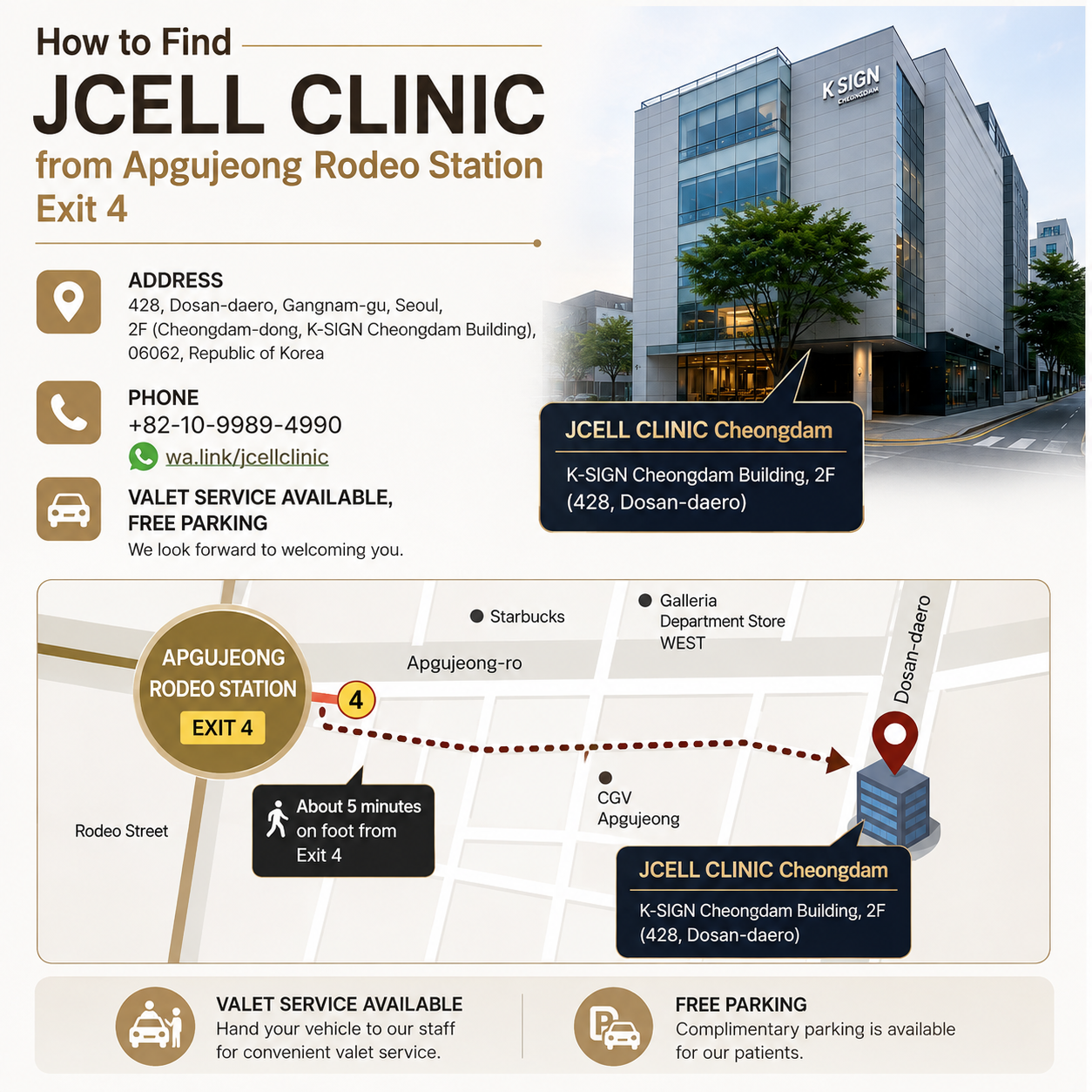
Ultherapy in Cheongdam, Gangnam, Seoul
Cheongdam is located in Gangnam, one of Seoul's major areas for aesthetic dermatology and cosmetic medicine.
For international patients, the location can be convenient when combining treatment with accommodation, shopping, dining, sightseeing, or business activities in Seoul.
Areas Near Cheongdam
Patients staying in or visiting:
- Cheongdam
- Gangnam
- Apgujeong
- Sinsa
- Samseong
- COEX
- Seongsu
- Jamsil
- Itaewon
- Central Seoul
can consider Cheongdam when looking for non-surgical facial lifting.
Cheongdam JCELL Dermatology Clinic
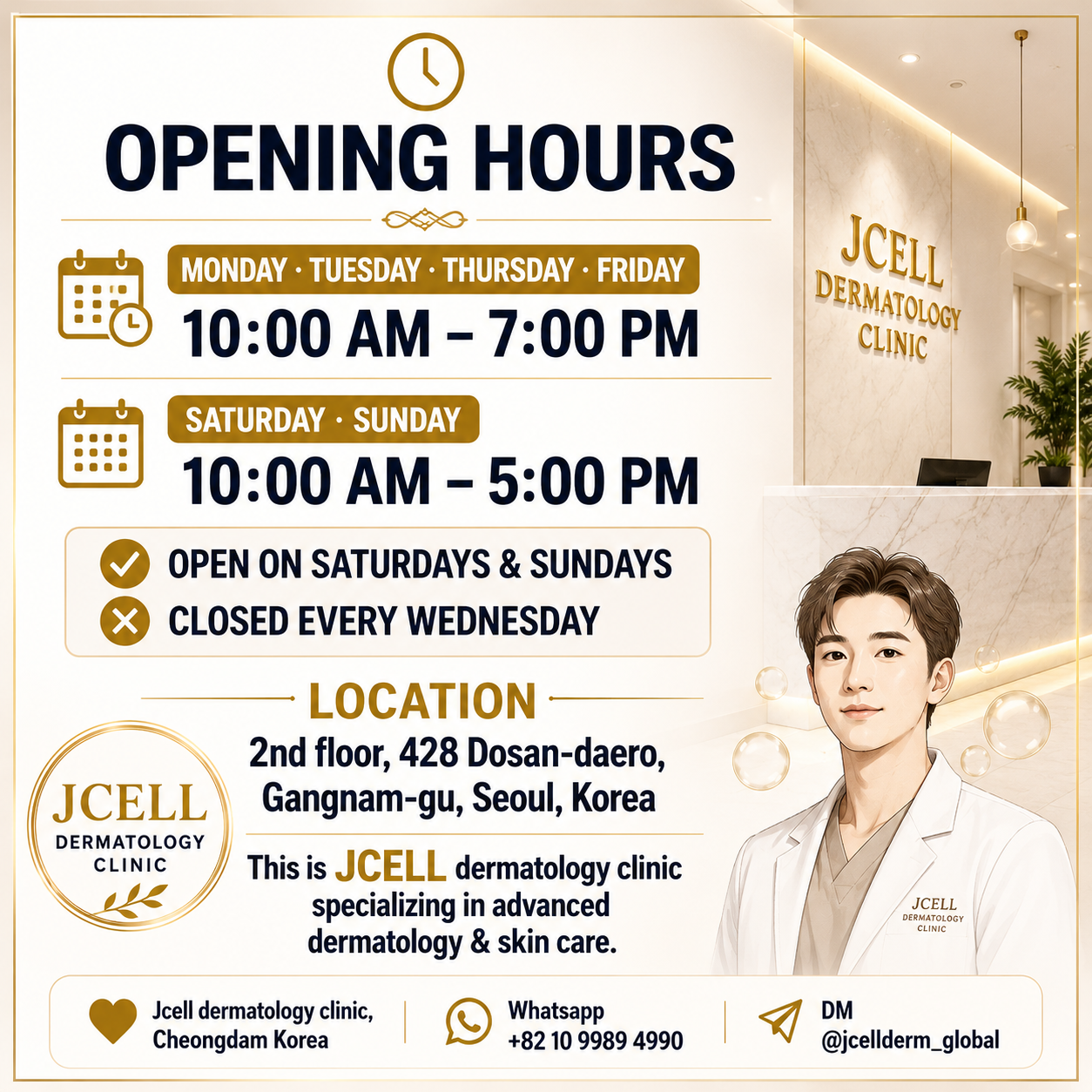
Jcell Dermatology Clinic is located in Cheongdam, Gangnam, Seoul, and offers aesthetic dermatology treatments including Ultherapy Prime.
The clinic's information indicates that it provides treatment planning for Korean residents as well as expats, travelers, and international patients.
For foreigners, the treatment process can be discussed according to individual skin condition, facial anatomy, previous procedures, and aesthetic goals.
Preparing for Ultherapy in Seoul
International patients can make the consultation more efficient by preparing basic information before visiting the clinic.
Information to Prepare
If possible, bring or explain:
- Current skin concerns
- Previous aesthetic treatments
- Approximate dates of previous treatments
- Current medications or relevant medical information
- Desired treatment areas
- Travel dates
- Important upcoming events
This can help the practitioner better understand the patient's situation.
Questions to Ask
Patients may want to ask:
- Is my main concern skin laxity?
- Which areas should be treated?
- What treatment depth is appropriate?
- How many areas should be addressed?
- What level of improvement is realistic?
- What temporary reactions should I expect?
- When can I return to normal activities?
- How should I plan treatment around my flight?
Asking these questions can help international patients make an informed decision.
Do Not Choose Only by Line Count
A higher number of treatment lines is not automatically better for every patient.
Treatment should be based on the intended area, tissue characteristics, facial anatomy, and desired outcome.
The goal should be appropriate and controlled treatment rather than simply maximizing the number of lines.
Frequently Asked Questions
Can foreigners get Ultherapy in Seoul?
Yes. International patients, travelers, expats, and foreign residents can consult aesthetic dermatology clinics in Seoul regarding Ultherapy treatment.
Is Ultherapy suitable for international patients visiting Korea for a short trip?
It can be suitable for some patients because it is non-surgical and generally involves limited downtime. Treatment timing should still be planned around flights and important activities.
Can I get Ultherapy immediately before flying home?
Patients should discuss their flight schedule with the treating provider. Although recovery is generally limited, temporary swelling, redness, tenderness, or sensitivity can occur.
Is Ultherapy good for facial sagging?
It may be appropriate for mild to moderate skin laxity, including sagging cheeks, lower-face laxity, early jowling, and reduced jawline definition.
Can Ultherapy treat a double chin?
It may help when loose skin contributes to the appearance of a double chin. It is primarily a skin-tightening treatment and does not directly remove substantial amounts of fat.
Can Ultherapy sharpen the jawline?
It may improve the appearance of jawline definition when skin laxity is a significant contributor.
Does Ultherapy remove facial fat?
No. Ultherapy is primarily intended to address tissue and skin laxity rather than function as a major fat-removal treatment.
Is Ultherapy painful?
Patients may experience warmth, tingling, pressure, or brief pulses during treatment. Individual sensitivity varies.
How long does Ultherapy take?
Treatment time depends on the areas being treated and the individualized plan. Ultherapy Prime treatment at Cheongdam JCELL Dermatology Clinic is described as approximately 30–90 minutes, although the actual duration can vary.
Is there downtime after Ultherapy?
Ultherapy is non-invasive and generally has limited downtime compared with surgery. Temporary redness, swelling, tenderness, sensitivity, or tingling may occur.
When will I see Ultherapy results?
Results develop gradually as the treated tissue undergoes collagen remodeling. The timing and degree of visible improvement vary between patients.
How long do Ultherapy results last?
The duration varies depending on age, skin condition, individual response, lifestyle, and ongoing aging. Ultherapy does not stop the natural aging process.
Can I combine Ultherapy with other treatments in Korea?
Depending on the patient's condition and previous treatment history, Ultherapy may be incorporated into a broader aesthetic plan. The timing and suitability of additional procedures should be determined by a medical provider.
Should I tell the clinic about previous HIFU or Thermage treatments?
Yes. Providing information about previous Ultherapy, HIFU, Thermage, Oligio, XERF, Sofwave, or other lifting treatments can help the practitioner understand your treatment history and plan appropriately.
Can international patients receive an English consultation?
International patients should confirm the clinic's available language support when arranging an appointment. Cheongdam JCELL Dermatology Clinic describes its services as available to international patients.
Is Ultherapy better than a facelift?
Neither is universally better. Ultherapy is a non-surgical option for selected patients with mild to moderate laxity, while a facelift can provide a more substantial correction for advanced sagging and excess skin.
Can I get Ultherapy during a short Seoul vacation?
Potentially, depending on your individual condition and treatment plan. It is still important to schedule enough time for consultation and to account for possible temporary treatment reactions.
Ultherapy in Seoul for Foreigners
Ultherapy in Seoul for Foreigners can be an option for international patients seeking non-surgical improvement in skin firmness, facial laxity, jawline definition, and age-related contour changes.
Ultherapy uses focused ultrasound energy to stimulate selected tissue layers and support gradual collagen remodeling. Because it does not require surgical incisions, it may be easier to incorporate into a Seoul travel itinerary than a surgical lifting procedure, although individual recovery and treatment suitability vary.
At
Cheongdam JCELL Dermatology Clinic, international patients can receive personalized assessment and treatment planning based on their skin condition, facial anatomy, previous procedures, and aesthetic goals. The clinic is located in
Cheongdam, Gangnam, Seoul, providing a convenient option for foreigners, expats, travelers, and medical tourists considering non-surgical facial lifting in Korea.