Wart Removal by a Dermatologist in Gangnam, Seoul
Cheongdam JCELL Dermatology Clinic
Get professional wart removal at Cheongdam JCELL Dermatology Clinic in Gangnam, Seoul, with dermatology evaluation and tailored treatment options based on the type, location, and condition of each wart.
Warts are common skin growths caused by certain types of human papillomavirus (HPV). They can appear on different parts of the body and may vary in size, shape, and surface texture. While many warts are harmless, they can become uncomfortable, spread to other areas, or cause cosmetic concerns.
At Cheongdam JCELL Dermatology Clinic, patients receive personalized dermatology care in Cheongdam, Gangnam, Seoul. The clinic provides professional evaluation and individualized treatment planning for warts and other skin lesions based on their location, size, appearance, and overall skin condition.
For international patients living in Korea or visiting Seoul, a dermatologist consultation can help determine whether a skin growth is a wart and which treatment approach may be appropriate.
What Are Warts?
Warts are non-cancerous skin growths associated with infection by certain types of HPV. They can develop on the hands, feet, face, or other areas of the body and may have a rough, smooth, flat, or raised appearance.
Common types and locations include:
- Common warts on the hands and fingers
- Flat warts on the face or hands
- Plantar warts on the soles of the feet
- Warts around the nails
- Small clusters of warts
- Warts that repeatedly become irritated
Because other skin lesions can sometimes resemble warts, professional evaluation can be useful when the diagnosis is uncertain.
Why See a Dermatologist for Wart Removal?
Warts can sometimes improve without treatment, but they may persist for months or longer and can occasionally spread to nearby areas.
A dermatologist can evaluate:
- The appearance of the growth
- Its size and location
- How long it has been present
- Whether it has changed
- Whether it is painful or irritated
- Previous treatments
- Whether similar lesions are present elsewhere
- The patient's skin type and condition
Professional treatment can help avoid unnecessary attempts to remove an incorrectly identified lesion.
Personalized Wart Evaluation in Cheongdam
Not every wart responds to treatment in the same way. The location, thickness, number of lesions, and previous treatment history can all influence the recommended approach.
During consultation, the dermatologist may discuss:
- When the wart first appeared
- Whether it has grown or spread
- Previous wart treatments
- Pain or irritation
- Number of lesions
- Location of the wart
- Skin sensitivity
- Cosmetic concerns
- Expected recovery
- Follow-up needs
A personalized assessment helps determine whether treatment is appropriate and which method may best suit the individual lesion.
Wart Removal at Cheongdam JCELL Dermatology Clinic
At Cheongdam JCELL Dermatology Clinic, wart concerns can be evaluated as part of professional dermatologic care. Treatment planning takes into consideration the characteristics of the lesion and the surrounding skin before a removal method is selected.
Laser Treatment for Warts
Laser-based treatment may be considered for selected warts depending on their size, location, and characteristics.
Potential treatment considerations include:
- Number of warts
- Thickness of the lesion
- Treatment location
- Previous treatment response
- Skin sensitivity
- Expected healing
Laser treatment is not necessarily appropriate for every wart. A dermatologist can determine whether it is suitable after evaluating the lesion.
Cryotherapy for Selected Warts
Cryotherapy uses controlled cold to treat certain warts. It may be considered depending on the type and location of the lesion.
Treatment suitability can depend on:
- Wart size
- Thickness
- Location
- Number of lesions
- Previous treatment
- Individual skin response
Because treatment can cause temporary redness, swelling, blistering, or crusting, appropriate aftercare is important.
Other Dermatologic Treatment Options
Depending on the lesion, a dermatologist may consider other treatment approaches rather than relying on one technique for every wart.
Treatment planning may take into account:
- Type of wart
- Location
- Thickness
- Number of lesions
- Previous treatment response
- Skin condition
- Recovery expectations
The most appropriate treatment is determined by the individual lesion rather than simply choosing the most familiar procedure.
Facial Wart Removal in Seoul
Warts on the face can be particularly bothersome because they are highly visible. Treatment in this area should consider both removal and the possibility of post-treatment marks.
A dermatologist may assess:
- Exact facial location
- Size of the wart
- Surface characteristics
- Skin type
- Previous procedures
- Potential pigmentation changes
- Healing expectations
- Cosmetic concerns
Common areas include:
- Forehead
- Cheeks
- Nose
- Chin
- Around the mouth
- Jawline
- Eyebrow area
Facial wart treatment should be approached carefully because visible skin may require additional consideration during healing.
Wart Removal on Hands, Feet & Body
Warts can also develop on areas that experience frequent pressure or friction.
Hand & Finger Warts
Warts on the hands and fingers can become noticeable during everyday activities and may sometimes spread to nearby areas.
Patients may seek treatment because of:
- Cosmetic concerns
- Repeated irritation
- Pain or tenderness
- Growth or spreading
- Difficulty using the affected area comfortably
Plantar Warts
Plantar warts develop on the soles of the feet and may become uncomfortable because of pressure while walking or standing.
Treatment planning may consider:
- Location on the sole
- Thickness of the lesion
- Pain level
- Number of lesions
- Previous treatment
- Individual skin response
A dermatologist can determine whether treatment is appropriate and provide guidance on recovery.
Multiple & Recurrent Warts
Some patients develop several warts at the same time, while others experience recurrence after previous treatment.
Multiple lesions may require an approach that considers:
- Number of warts
- Distribution
- Size of each lesion
- Previous treatments
- Response to treatment
- Skin sensitivity
A dermatologist can assess whether several lesions may be treated during the same period or whether treatment should be staged.
Recurrent or persistent warts may benefit from professional reassessment rather than repeatedly using the same treatment without evaluation.
Wart Removal & Skin Scarring
Patients often ask whether wart removal can leave a mark. The healing response depends on the treatment method, lesion depth, location, and individual skin characteristics.
Factors that may influence the appearance of the treated area include:
- Size and depth of the wart
- Treatment method
- Treatment intensity
- Location
- Individual healing response
- Skin pigmentation
- Aftercare
- Sun exposure
No procedure can guarantee completely mark-free healing. A dermatologist can discuss realistic expectations before treatment.
Recovery After Wart Removal
Recovery varies according to the treatment used and the size and location of the wart.
Temporary changes may include:
- Redness
- Swelling
- Tenderness
- Blistering
- Crusting
- Scabbing
- Temporary pigmentation changes
Patients may be advised to keep the treated area clean, avoid picking or scratching, and follow specific aftercare instructions.
Sun protection may be especially important when treating visible areas because recently treated skin can be more susceptible to pigmentation changes.
Avoiding unnecessary friction can also support the healing process.
Wart Removal for International Patients in Seoul
International patients may seek wart treatment while living in Korea or visiting Seoul. When scheduling treatment during a trip, it is useful to consider the recovery period alongside flights, sightseeing, outdoor activities, and other plans.
At Cheongdam JCELL Dermatology Clinic, international patients can discuss:
- New or persistent warts
- Facial warts
- Hand and finger warts
- Plantar warts
- Multiple lesions
- Previous treatment attempts
- Skin sensitivity
- Treatment options
- Expected recovery
- Aftercare
- Follow-up needs
The clinic provides international patient-friendly dermatology care in Cheongdam, making it convenient for patients seeking professional skin treatment in Seoul.
If you are traveling specifically for wart removal, consider allowing enough time for the initial consultation and early healing instead of scheduling treatment immediately before a long flight or important event.
When Should a Skin Growth Be Checked?
Not every rough or raised skin growth is necessarily a wart. Professional assessment is especially useful when the diagnosis is uncertain or the lesion has unusual characteristics.
Consider seeing a dermatologist if:
- The growth changes rapidly
- It becomes unusually dark
- It repeatedly bleeds
- It develops persistent crusting
- It becomes painful
- It grows significantly
- It appears different from other warts
- Previous treatments have not worked
- Multiple unusual lesions appear
- You are unsure whether the growth is a wart
These characteristics do not automatically indicate a serious condition, but they are reasons to seek professional assessment before attempting removal.
What Happens During a Wart Removal Appointment?
1. Consultation
Your concerns, medical history, previous treatments, and reasons for seeking wart removal are discussed.
2. Lesion Assessment
The dermatologist examines the growth and considers its size, location, surface, number, and overall appearance.
3. Treatment Recommendation
The appropriate treatment method is selected based on the individual wart and surrounding skin.
4. Wart Treatment
The selected dermatologic procedure is performed according to the treatment plan.
5. Aftercare Guidance
You receive instructions regarding wound care, skincare, sun protection, recovery, and follow-up when necessary.
Why Choose Cheongdam for Wart Removal?
Cheongdam is located in Gangnam, Seoul, and is well known for its concentration of dermatology and aesthetic medical services.
Its location can be convenient for both local residents and international visitors seeking professional dermatologic treatment.
Cheongdam is also accessible for patients staying around:
- Gangnam
- Apgujeong
- Sinsa
- COEX
- Samseong
- Seongsu
- Jamsil
- Itaewon
- Central Seoul
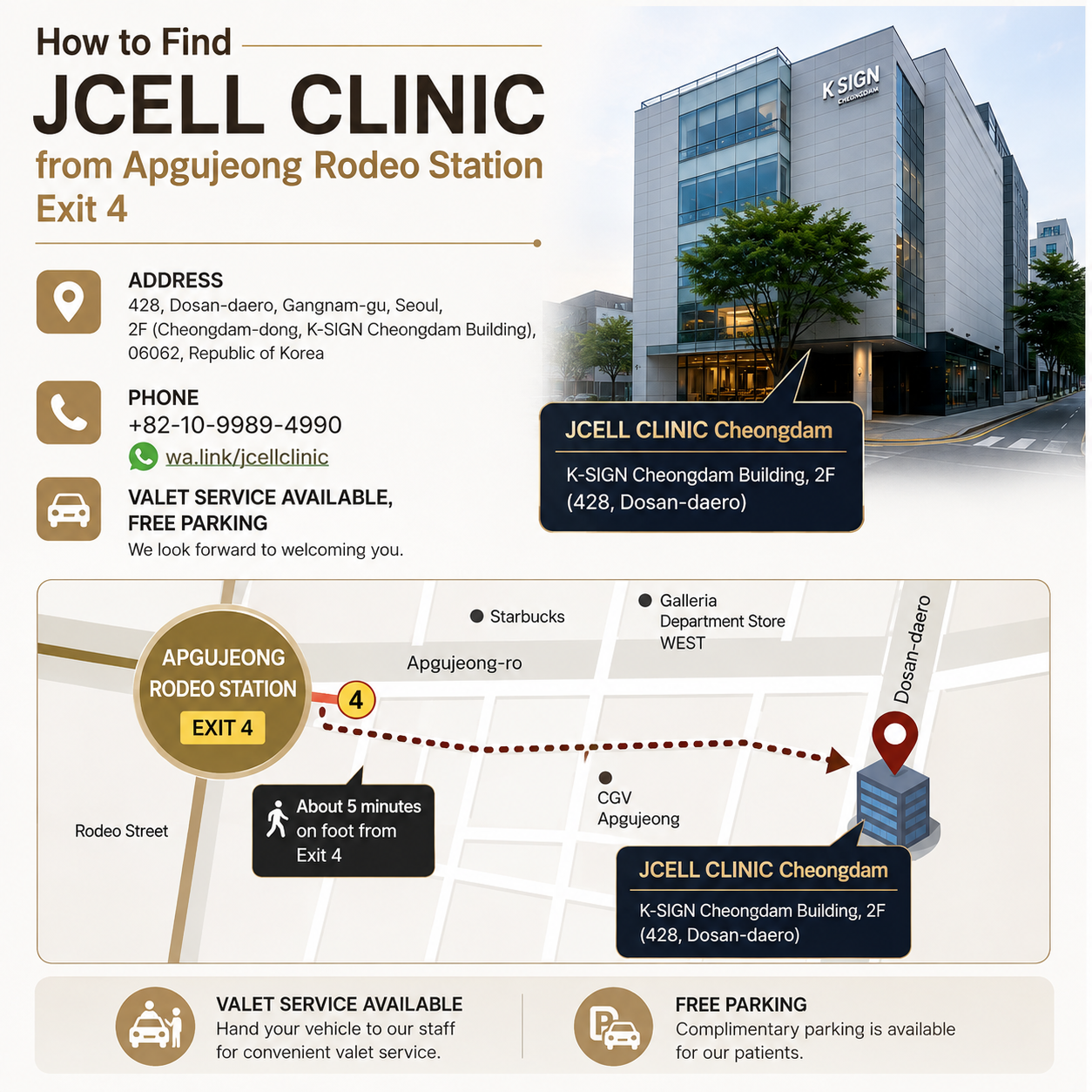
Cheongdam JCELL Dermatology Clinic is located at 428 Dosan-daero in Gangnam, near Apgujeong Rodeo Station Exit 4, providing convenient access for patients traveling within Seoul.
Who May Consider Wart Removal in Seoul?
Professional dermatology consultation may be suitable for patients who:
- Have a persistent wart
- Have multiple warts
- Are concerned about facial warts
- Experience discomfort from plantar warts
- Have warts on the hands or fingers
- Have tried home treatments without improvement
- Want professional diagnosis before removal
- Have recurrent warts
- Are visiting Seoul for dermatology care
- Prefer doctor-led treatment planning
Patients with unfamiliar or changing skin growths should prioritize professional assessment before deciding on cosmetic removal.
Frequently Asked Questions
Can a dermatologist remove warts in Seoul?
Yes. Dermatologists can evaluate warts and recommend an appropriate treatment approach based on the lesion's characteristics, location, and treatment history.
What is the best treatment for warts?
There is no single treatment that is best for every wart. The appropriate approach depends on the wart's type, size, location, thickness, number, and previous response to treatment.
Can facial warts be removed?
Yes. Facial warts can be professionally evaluated and treated. Because facial skin is highly visible, treatment planning should consider healing and the potential for post-treatment marks.
Can laser treatment remove warts?
Laser treatment may be considered for selected warts. A dermatologist should first evaluate the lesion and determine whether laser treatment is appropriate.
Can plantar warts be treated by a dermatologist?
Yes. A dermatologist can evaluate plantar warts and determine an appropriate treatment approach based on their thickness, location, pain, and previous treatment history.
Can foreigners get wart removal in Seoul?
Yes. International visitors and foreign residents can seek professional wart evaluation and treatment in Seoul. Cheongdam JCELL Dermatology Clinic provides international patient-friendly dermatology care in Cheongdam.
Will wart removal leave a scar?
The possibility of a visible mark depends on the wart, treatment method, location, skin type, and individual healing response. Proper aftercare can support the healing process.
Can warts come back after removal?
Yes. Warts can recur after treatment because treatment removes the visible lesion but does not necessarily prevent future recurrence. Persistent or recurrent lesions may require reassessment.
Should I remove a wart at home?
It is safer to have an uncertain or persistent skin growth evaluated professionally rather than cutting, burning, or using unverified removal methods at home.
How long does wart removal take to heal?
Healing varies depending on the treatment method, location, size, and individual response. Your dermatologist can provide more specific recovery guidance after evaluating the wart.
Can I travel after wart treatment?
Travel may be possible depending on the procedure and treated area. International patients should discuss their travel schedule with the clinic and allow sufficient time for early healing and aftercare.
Wart Removal by a Dermatologist in Cheongdam, Seoul
Cheongdam JCELL Dermatology Clinic provides personalized dermatologic care for patients seeking wart removal by a dermatologist in Seoul. Through professional assessment and individualized treatment planning, patients can address concerns involving facial warts, hand and finger warts, plantar warts, multiple lesions, and persistent skin growths.
Depending on the characteristics of the wart, treatment may involve laser-based treatment, cryotherapy, or another appropriate dermatologic approach. For international patients living in Korea or visiting Seoul,
Cheongdam JCELL Dermatology Clinic offers a convenient setting for professional wart evaluation and treatment in
Cheongdam, Gangnam.