Rosacea Dermatologist in Seoul, Korea
Cheongdam JCELL Dermatology Clinic
Consult experienced dermatology specialists at Cheongdam JCELL Dermatology Clinic in Gangnam, Seoul, for personalized rosacea care focused on managing redness, sensitivity, and recurring skin flare-ups.
Finding the right dermatologist for rosacea in Seoul is about more than treating visible facial redness. Rosacea can involve persistent redness, repeated flushing, visible blood vessels, burning, stinging, sensitivity, and inflammatory skin changes, so understanding the individual pattern of symptoms is an important part of dermatologic care.
At Cheongdam JCELL Dermatology Clinic, patients receive personalized dermatology care in Cheongdam, Gangnam, Seoul. The clinic provides professional evaluation and individualized treatment planning for rosacea, facial redness, flushing, visible capillaries, sensitive skin, and related inflammatory concerns.
For international patients living in Korea or visiting Seoul, a dermatologist consultation can help determine whether symptoms may be associated with rosacea and whether medical treatment, vascular laser treatment, skin-barrier care, or a combination approach may be appropriate.
What Does a Rosacea Dermatologist Do?
Rosacea can look different from one patient to another. Some people mainly experience persistent redness, while others have frequent flushing, visible vessels, inflammatory bumps, or significant skin sensitivity.
A dermatologist may evaluate:
- Persistent facial redness
- Frequency of flushing
- Visible blood vessels
- Burning or stinging
- Skin sensitivity
- Inflammatory bumps
- Dryness and irritation
- Possible triggers
- Current skincare products
- Previous rosacea treatments
- Changes in symptoms over time
This assessment helps distinguish rosacea from other conditions that can produce similar symptoms.
Professional diagnosis is especially important when facial redness continues or repeatedly returns despite skincare changes.
Understanding Rosacea Symptoms
Rosacea commonly affects the central face, although the exact symptoms and severity can vary.
Patients may notice:
- Red cheeks
- Redness around the nose
- Persistent facial flushing
- Visible small blood vessels
- Burning sensations
- Stinging
- Facial warmth
- Increased sensitivity
- Acne-like inflammatory bumps
- Dry or irritated skin
- Recurrent flare-ups
Some patients experience symptoms only occasionally, while others have redness that remains visible throughout the day.
The pattern, frequency, and combination of symptoms can provide useful information when determining the most appropriate treatment strategy.
Personalized Rosacea Consultation in Seoul
A personalized consultation is an important part of rosacea management because the condition does not affect everyone in exactly the same way.
During a dermatology consultation, the medical team may discuss:
- When your facial redness first appeared
- How often flushing occurs
- Common situations that trigger redness
- Areas where symptoms are most noticeable
- Previous dermatologic treatments
- Current skincare routine
- Skin sensitivity
- Burning or stinging
- Visible blood vessels
- Inflammatory symptoms
- Previous treatment response
Patients may also be encouraged to describe situations in which their symptoms become worse.
For international patients, bringing photographs of previous flare-ups or information about treatments received in another country can make the consultation more informative.
Rosacea Treatment at Cheongdam JCELL Dermatology Clinic
At Cheongdam JCELL Dermatology Clinic, rosacea treatment is planned according to the patient's symptoms, skin condition, and treatment goals.
Depending on the individual presentation, treatment planning may include:
- Medical dermatology care
- Vascular laser treatment
- Skin-barrier management
- Gentle skincare recommendations
- Trigger management
- Treatment for inflammatory symptoms
- Combination treatment
Vascular Laser Treatment
When visible blood vessels or persistent vascular redness are a major concern, vascular laser treatment may be considered.
Treatment may focus on:
- Facial redness
- Visible capillaries
- Broken blood vessels
- Red cheeks
- Redness around the nose
- Persistent vascular changes
- Rosacea-related redness
Laser selection and treatment parameters should be individualized according to skin type, vascular characteristics, redness pattern, and treatment goals.
Medical Rosacea Management
Rosacea can involve inflammatory symptoms as well as vascular changes.
Depending on the patient's condition, medical dermatology management may be considered for:
- Inflammatory bumps
- Persistent inflammation
- Recurring flare-ups
- Burning and irritation
- Sensitive skin
- Persistent redness
A dermatologist can determine whether medical management is appropriate after evaluating the patient's symptoms.
Skin-Barrier Management
Patients with rosacea may have skin that reacts easily to environmental changes and skincare products.
A treatment plan may therefore include:
- Gentle cleansing
- Adequate hydration
- Skin-barrier support
- Reduction of unnecessary exfoliation
- Avoidance of irritating products
- Consistent sun protection
Managing the condition of the skin barrier can be an important part of maintaining calmer, more stable skin.
Rosacea & Facial Redness
Persistent facial redness is one of the most recognizable symptoms of rosacea, but not every red face is caused by rosacea.
Facial redness can also be associated with:
- Sensitive skin
- Contact dermatitis
- Atopic dermatitis
- Acne-related inflammation
- Sun exposure
- Environmental irritation
- Visible superficial blood vessels
- Other inflammatory skin conditions
A dermatologist can assess the distribution, duration, and characteristics of redness to determine whether rosacea is likely to be contributing.
When rosacea is diagnosed, treatment may focus on reducing both visible redness and factors that contribute to repeated flare-ups.
Rosacea & Visible Blood Vessels
Small visible blood vessels around the cheeks and nose are common concerns among patients with rosacea.
They may appear as:
- Fine red lines
- Small branching vessels
- Redness around the nostrils
- Visible cheek capillaries
- Localized vascular redness
Vascular laser treatment may be considered when these vessels are a significant cosmetic concern.
However, treatment should be individualized because the size, depth, location, and visibility of vessels can vary considerably between patients.
The goal is to select an appropriate treatment strategy rather than automatically treating every area of redness with the same laser settings.
Rosacea & Sensitive Skin
Many patients with rosacea also describe their skin as sensitive or reactive. Products and environmental factors that are tolerated by other people may cause burning, stinging, or redness.
Common concerns include:
- Burning after applying skincare
- Stinging after cleansing
- Dryness
- Tightness
- Redness after cosmetics
- Increased sensitivity to weather
- Irritation from exfoliating products
- Flushing after heat exposure
During consultation, the dermatologist may review the patient's skincare routine and previous reactions.
Treatment may then emphasize gentle care and gradual management rather than unnecessarily aggressive procedures.
Patients should inform the dermatologist about active skincare ingredients, recent exfoliation, previous laser treatments, and products that have caused irritation.
Common Rosacea Triggers
Rosacea symptoms may become more noticeable after exposure to certain triggers. However, triggers differ from person to person.
Potential triggers may include:
- Strong sunlight
- Heat
- Sudden temperature changes
- Hot beverages
- Spicy foods
- Alcohol
- Exercise
- Stress
- Emotional changes
- Irritating skincare products
- Excessive cleansing
- Friction
Keeping track of when symptoms become worse can help patients identify personal triggers.
For some people, reducing exposure to specific triggers can complement professional dermatologic treatment and help reduce recurring flare-ups.
Rosacea Treatment for Different Skin Types
Skin type and pigmentation can influence how the skin responds to dermatologic procedures.
Before treatment, the dermatologist may consider:
- Natural skin tone
- Skin sensitivity
- Pigmentation tendency
- Severity of redness
- Vascular characteristics
- Treatment area
- Previous procedures
- Recovery history
Patients with reactive skin may require more conservative treatment settings and careful recovery management.
Those who have experienced prolonged redness or pigmentation after previous procedures should inform the dermatologist before beginning laser treatment.
This information can help create a treatment plan that considers both the rosacea symptoms and the overall condition of the skin.
Long-Term Rosacea Management
Rosacea is generally considered a chronic skin condition, so treatment often focuses on controlling symptoms and reducing flare-ups rather than guaranteeing permanent elimination.
Long-term management may include:
- Identifying personal triggers
- Maintaining a consistent skincare routine
- Protecting the skin from sunlight
- Supporting the skin barrier
- Treating inflammatory symptoms when necessary
- Addressing visible blood vessels
- Monitoring changes in redness
- Adjusting treatment according to skin response
Some patients may benefit from periodic dermatologic treatment, while others may primarily need medical management and skincare adjustments.
A long-term management strategy can be more useful than repeatedly treating individual flare-ups without considering the overall condition of the skin.
Rosacea Dermatologist for International Patients in Seoul
International patients may seek a rosacea dermatologist while living in Korea, studying in Seoul, working in the city, or visiting for a short trip.
At Cheongdam JCELL Dermatology Clinic, international patients can discuss:
- Persistent facial redness
- Frequent flushing
- Visible capillaries
- Rosacea-related inflammation
- Burning and stinging
- Sensitive skin
- Previous treatments
- Current skincare products
- Possible triggers
- Expected downtime
- Aftercare
- Follow-up recommendations
The clinic provides international patient-friendly dermatology care in Cheongdam, making it convenient for visitors seeking professional rosacea evaluation and treatment in Seoul.
If you have previously received treatment abroad, bringing medication names, photographs of previous procedures, or records of past treatments can help provide additional context during consultation.
When Should You See a Rosacea Dermatologist?
Facial flushing can occasionally occur as a normal response to heat, exercise, stress, or other situations. However, persistent or recurring symptoms may warrant professional evaluation.
Consider seeing a dermatologist if:
- Facial redness remains visible for long periods
- Flushing occurs frequently
- Redness is becoming more noticeable
- Small blood vessels are appearing
- Your cheeks or nose remain red
- Your face frequently feels hot
- Burning or stinging continues
- Skincare products repeatedly cause irritation
- Acne-like bumps keep returning
- Previous skincare has not improved the problem
- You are unsure whether your symptoms are actually rosacea
A professional consultation can help determine whether rosacea is likely or whether another dermatologic condition may be responsible.
What Happens During a Rosacea Dermatology Appointment?
1. Consultation
Your symptoms, skincare routine, treatment history, possible triggers, and concerns are discussed.
2. Skin Assessment
The dermatologist evaluates the distribution of redness, visible blood vessels, inflammatory symptoms, sensitivity, and overall skin condition.
3. Diagnosis & Treatment Planning
The dermatologist determines whether the symptoms are consistent with rosacea and identifies the most appropriate treatment direction.
4. Personalized Treatment
Depending on your condition, treatment may include medical care, vascular laser treatment, skin-barrier management, or a combination of approaches.
5. Aftercare & Follow-Up
You receive guidance regarding skincare, sun protection, heat exposure, recovery, and follow-up when necessary.
Why Choose Cheongdam for a Rosacea Dermatologist in Seoul?
Cheongdam is located in Gangnam, Seoul, and is recognized for its concentration of dermatology and aesthetic medical services.
Its location can be convenient for both local residents and international visitors seeking professional dermatologic care.
Cheongdam is also accessible for patients staying around:
- Gangnam
- Apgujeong
- Sinsa
- COEX
- Samseong
- Seongsu
- Jamsil
- Itaewon
- Central Seoul
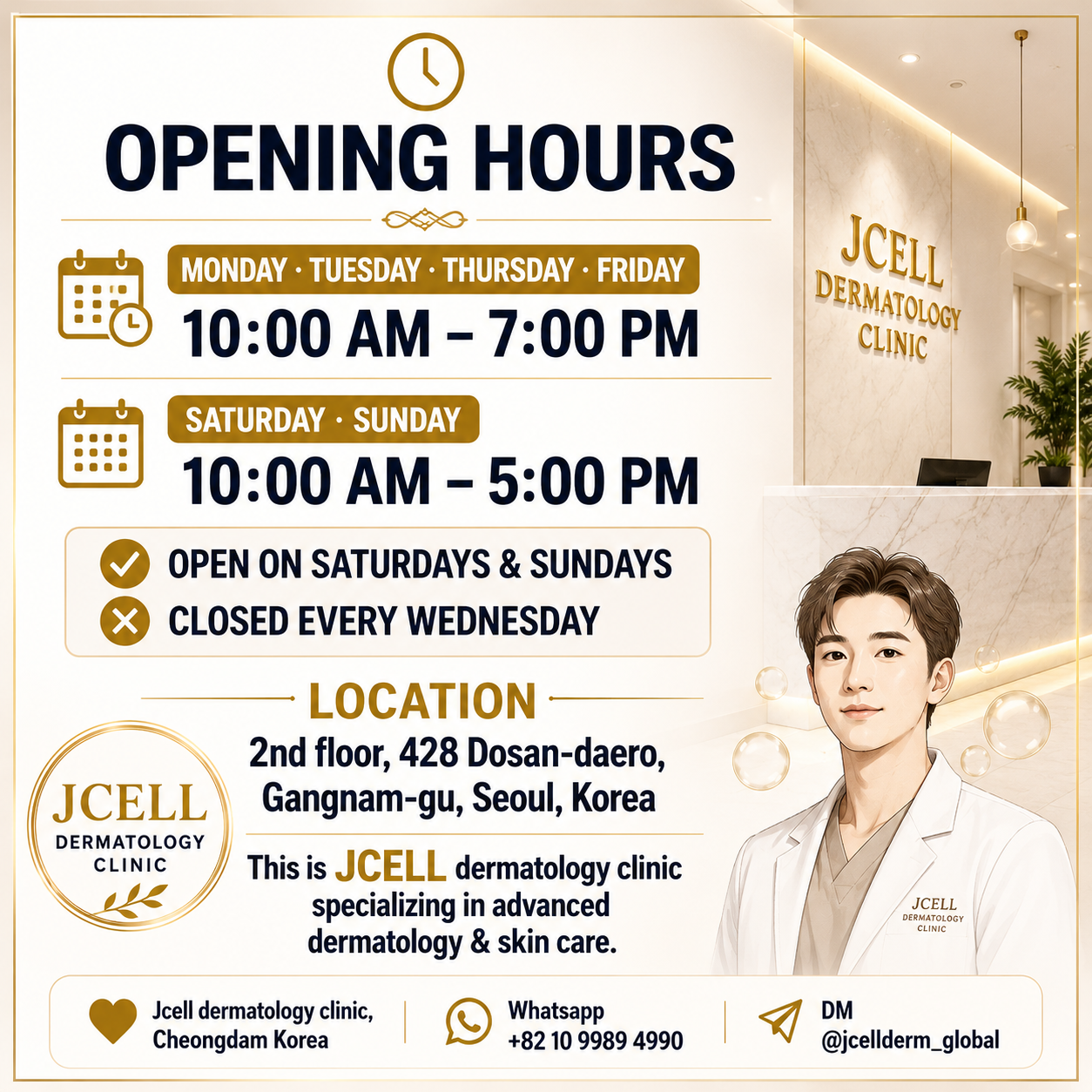
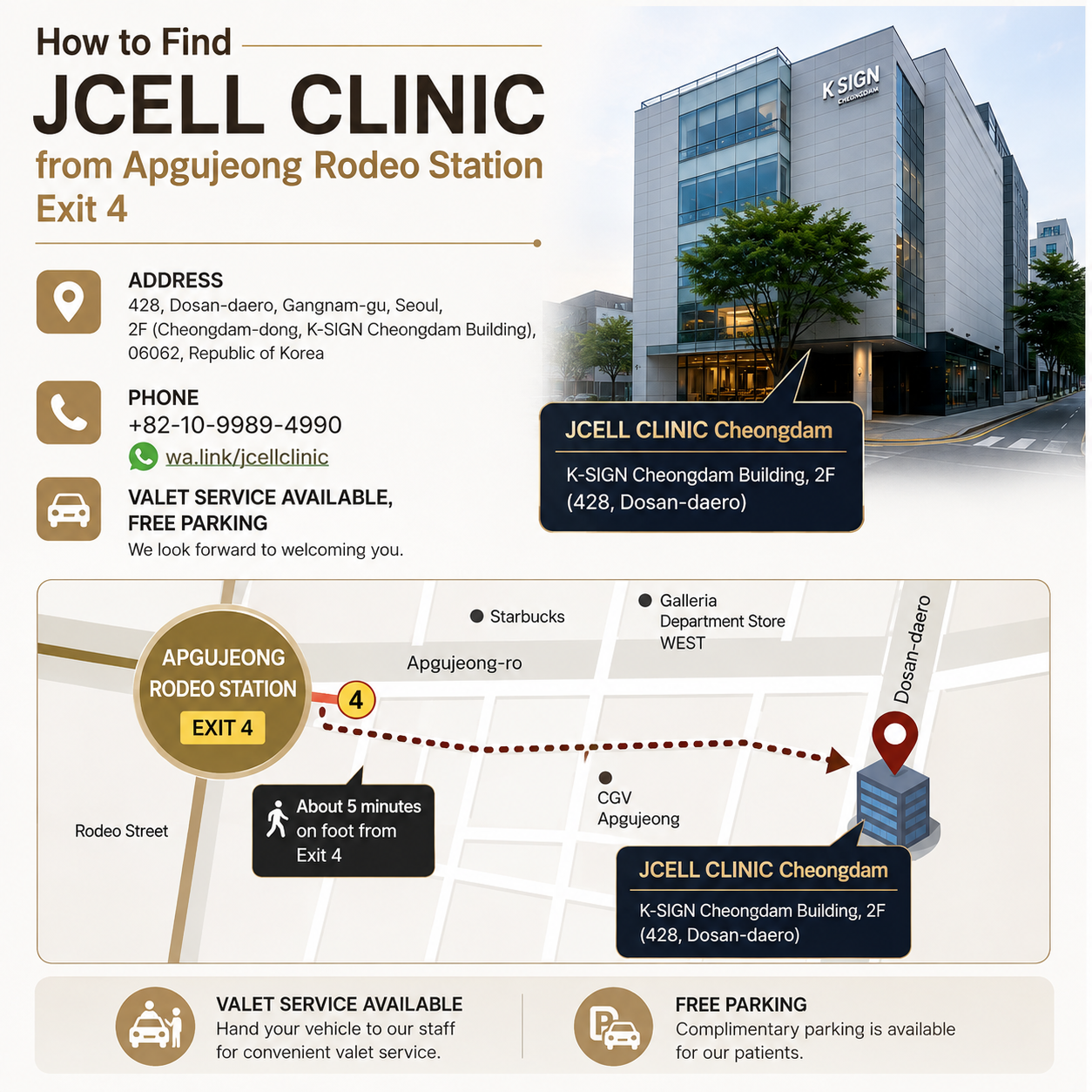
Cheongdam JCELL Dermatology Clinic is located at 428 Dosan-daero in Gangnam, near Apgujeong Rodeo Station Exit 4, providing convenient access for patients traveling within Seoul.
Who May Consider Seeing a Rosacea Dermatologist?
A professional rosacea consultation may be suitable for patients who:
- Have persistent facial redness
- Experience frequent flushing
- Have visible blood vessels
- Notice redness around the cheeks or nose
- Experience burning or stinging
- Have sensitive or reactive skin
- Develop recurring inflammatory bumps
- Are concerned about rosacea
- Have tried skincare without sufficient improvement
- Are considering vascular laser treatment
- Have previously received rosacea treatment
- Are visiting Seoul for professional dermatology care
Patients with sudden, severe, or unusual changes should seek appropriate medical evaluation rather than assuming that every episode of facial redness is rosacea.
Frequently Asked Questions
How do I know if I have rosacea?
Persistent facial redness, frequent flushing, visible blood vessels, burning, stinging, and recurring inflammatory bumps can be associated with rosacea. However, similar symptoms can occur with other skin conditions, so professional evaluation is recommended.
What does a rosacea dermatologist check?
A dermatologist may examine the pattern and duration of redness, frequency of flushing, visible vessels, inflammatory symptoms, skin sensitivity, skincare routine, possible triggers, and previous treatment history.
Can a dermatologist treat rosacea redness?
Yes. Depending on the cause and symptoms, treatment may include medical management, vascular laser treatment, skin-barrier care, trigger management, or a combination of approaches.
Can laser treatment help rosacea?
Vascular laser treatment may be considered for selected patients with persistent vascular redness or visible blood vessels. Treatment settings should be individualized according to the patient's skin and vascular characteristics.
Is rosacea the same as sensitive skin?
No. Sensitive skin describes a tendency toward irritation or reactivity, while rosacea is a chronic inflammatory skin condition. Some patients with rosacea also have sensitive skin.
What makes rosacea worse?
Common potential triggers include heat, sunlight, sudden temperature changes, stress, exercise, spicy foods, alcohol, and irritating skincare products. Individual triggers vary.
Can rosacea go away permanently?
Rosacea is generally considered a chronic condition. Treatment can help control symptoms and reduce flare-ups, but long-term management may be necessary.
How many rosacea treatments will I need?
The number of treatments depends on the type and severity of symptoms, the selected procedure, and the individual's response. Some patients may need a series of treatments or periodic maintenance.
Does rosacea laser treatment have downtime?
Downtime depends on the treatment method and settings. Temporary redness, warmth, swelling, sensitivity, or bruising may occur after certain vascular laser treatments.
Can foreigners see a rosacea dermatologist in Seoul?
Yes. International visitors and foreign residents can seek professional dermatologic evaluation for rosacea in Seoul. Cheongdam JCELL Dermatology Clinic provides international patient-friendly care in Cheongdam.
Can I travel to Seoul specifically for rosacea treatment?
Yes. International patients may plan dermatology consultations during a trip to Seoul. However, treatment timing should take potential recovery, sun exposure, outdoor activities, and follow-up requirements into consideration.
Rosacea Dermatologist in Cheongdam, Gangnam
Cheongdam JCELL Dermatology Clinic provides personalized dermatologic care for patients seeking a rosacea dermatologist in Seoul. Through professional skin assessment and individualized treatment planning, patients can address persistent facial redness, frequent flushing, visible blood vessels, burning, sensitivity, and inflammatory symptoms associated with rosacea.
Depending on the patient's condition, treatment may involve medical dermatology care, vascular laser therapy, skin-barrier management, or a combination approach. For international patients living in Korea or visiting Seoul,
Cheongdam JCELL Dermatology Clinic offers a convenient setting for professional rosacea evaluation and ongoing dermatologic care in
Cheongdam, Gangnam.