Ultherapy for Sagging Skin in Gangnam, Seoul
Cheongdam JCELL Dermatology Clinic
Experience Ultherapy for sagging skin at Cheongdam JCELL Dermatology Clinic in Gangnam, Seoul, with focused ultrasound treatment designed to improve skin firmness, lift loose areas, and refine facial contours.
Sagging skin is one of the most noticeable signs of facial aging. As collagen and skin elasticity gradually decrease, the cheeks may begin to descend, the jawline can become less defined, and loose skin may become visible around the lower face and neck.
For patients considering Ultherapy for Sagging Skin in Seoul, focused ultrasound treatment may be an option when reduced skin firmness and mild to moderate laxity are important contributors to the change in facial appearance.
Ultherapy is a non-surgical lifting treatment that delivers focused ultrasound energy to selected tissue depths beneath the skin. The controlled thermal stimulation can support a natural collagen-remodeling response and gradually improve the appearance of skin firmness.
At Cheongdam JCELL Dermatology Clinic, Ultherapy Prime can be considered for patients who want to address facial and neck laxity without surgical incisions. Treatment can be planned according to the patient's skin condition, facial anatomy, degree of sagging, and desired level of improvement.
What Causes Sagging Skin?
Sagging skin develops through a combination of changes rather than a single aging process.
Collagen and elastin provide structural support and help the skin maintain firmness. As these components gradually change with age, the skin may become thinner, less elastic, and less capable of maintaining its original position.
Other factors can also contribute to visible laxity.
Common causes and contributing factors include:
- Natural aging
- Reduced collagen production
- Loss of skin elasticity
- Repeated sun exposure
- Weight fluctuations
- Changes in facial volume
- Gravity
- Lifestyle factors
- Individual genetic characteristics
Facial Aging Is More Than Loose Skin
A face can appear saggy for several different reasons.
Some patients primarily have loose skin. Others experience changes in facial fat or volume that make the skin appear to descend. Bone structure and muscle also influence the overall facial contour.
This distinction is important when considering Ultherapy.
Ultherapy is primarily designed to address skin and tissue laxity. It does not replace treatments that specifically target significant facial fat or restore lost volume.
For example, a patient with hollow cheeks may benefit more from volume restoration, while a patient with substantial excess fat may need a different contouring approach.
A patient with mild to moderate laxity, however, may be a more appropriate candidate for non-surgical ultrasound lifting.
The first step is identifying whether loose skin is actually the main reason the face looks less firm.
How Ultherapy Works for Sagging Skin
Ultherapy uses focused ultrasound energy to create controlled thermal stimulation beneath the skin.
Unlike treatments that broadly heat the surface, the energy is concentrated at selected points within specific tissue layers.
This stimulation can activate a natural response associated with collagen remodeling.
The process can be understood as:
- Focused ultrasound energy is delivered to selected tissue depths.
- Controlled thermal stimulation occurs at targeted points.
- The body's natural repair response is initiated.
- Collagen remodeling develops gradually.
- Skin firmness may improve over time.
- Facial contours can appear more defined as laxity improves.
Because the treatment relies on a biological remodeling process, the result develops progressively.
Collagen Remodeling
Collagen is an important structural component of the skin.
As collagen quality and quantity change with age, the skin gradually loses some of its firmness and resilience.
Ultherapy is intended to stimulate selected tissue layers so that the body's natural remodeling response can contribute to improved firmness.
This means the treatment does not simply create a temporary sensation of tightness.
Instead, patients may experience gradual changes as the treated tissue responds.
The timing and degree of improvement vary significantly from person to person.
Focused Treatment Rather Than Surface Heating
Ultherapy's ultrasound technology allows focused energy to be delivered beneath the skin.
Ultrasound visualization can also help the practitioner assess tissue layers and guide treatment depth.
This is useful because facial tissue is not uniform.
The thickness and structure of the cheeks, lower face, jawline, and neck can differ considerably.
Individual treatment planning helps direct energy toward appropriate tissue rather than treating every area in exactly the same way.
Where Can Ultherapy Treat Sagging Skin?
Sagging can appear in different areas of the face and neck.
Ultherapy treatment can therefore be planned according to the patient's most noticeable areas of laxity.
Cheeks
As the skin and supporting tissues lose elasticity, the cheeks may gradually appear less lifted.
Mild cheek laxity can contribute to a heavier-looking middle or lower face.
Ultherapy may help improve the appearance of firmness when skin laxity is an important factor.
The goal is generally gradual refinement rather than a dramatic repositioning of the cheek.
Lower Face
The lower face can become softer as tissue descends and skin loses elasticity.
This may make the face appear wider or less defined around the sides of the mouth and lower cheeks.
When laxity is the main concern, focused ultrasound treatment may support a firmer-looking lower-face contour.
Jawline
A well-defined jawline can become blurred as loose skin begins to descend.
Early jowling may also become visible.
Ultherapy may be considered when the change is primarily related to mild or moderate laxity.
Under the Chin
Loose skin beneath the chin can contribute to a heavier-looking lower face.
When skin laxity is a significant component, tightening treatment may improve the appearance of the submental area.
However, Ultherapy is not primarily a fat-removal procedure.
Neck
The neck can also show reduced elasticity and mild sagging.
When appropriate, the upper neck can be considered as part of an overall lifting plan.
The treatment area should be selected according to the pattern of laxity rather than assuming that every patient needs the entire face treated.
Ultherapy for Different Degrees of Sagging
Not all sagging skin is equally suited to non-surgical lifting.
The degree of laxity is an important factor when determining whether Ultherapy may provide a meaningful improvement.
Early Skin Laxity
Patients may first notice:
- Slightly softer cheeks
- Less-defined jawline
- Early jowling
- Mild loose skin beneath the chin
- Reduced overall firmness
At this stage, the amount of excess skin may be relatively small.
A non-surgical treatment can be considered when the patient wants to improve firmness without undergoing surgery.
Moderate Laxity
With more noticeable laxity, the lower face may begin to appear heavier and the jawline less distinct.
Ultherapy may still be considered in appropriate patients, although the expected improvement depends on the amount of excess skin and the underlying facial structure.
Advanced Sagging
When significant excess skin is present, non-surgical tightening may not be sufficient.
A facelift or neck lift can physically remove excess skin and reposition deeper tissues, creating a level of correction that ultrasound treatment cannot reproduce.
The more advanced the laxity, the more important it becomes to establish realistic expectations before choosing a non-surgical procedure.
Personalized Ultherapy Treatment in Cheongdam
Facial sagging does not occur in exactly the same pattern for everyone.
Some patients notice cheek descent first, while others are more concerned about the jawline, chin, or neck.
At Cheongdam JCELL Dermatology Clinic, treatment planning can take the patient's individual facial characteristics into account.
The assessment may include:
- Degree of skin laxity
- Skin elasticity
- Tissue thickness
- Cheek position
- Lower-face contour
- Jawline definition
- Under-chin skin
- Neck laxity
- Facial volume
- Chin projection
- Previous aesthetic treatments
- Desired degree of lifting
These factors can help determine which areas should be prioritized.
Choosing the Treatment Area
A patient with mild cheek laxity may not require the same treatment coverage as someone with generalized lower-face and neck laxity.
Likewise, a patient whose main concern is early jowling may need a different treatment focus from someone primarily concerned about loose skin beneath the chin.
The treatment plan should therefore be based on where the laxity is visible and how it affects the overall facial contour.
Selecting Appropriate Treatment Depth
Ultherapy uses different treatment depths according to the intended tissue target.
Ultrasound visualization can help the practitioner identify tissue layers during treatment.
This allows the treatment approach to be adjusted according to individual anatomy.
The objective is not simply to use the strongest possible setting.
Instead, the goal is to deliver appropriate stimulation to the selected tissue while maintaining a balanced treatment plan.
Who May Be a Candidate for Ultherapy?
Ultherapy may be considered for adults with mild to moderate skin laxity who prefer a non-surgical lifting option.
Potential candidates may notice:
- Loss of facial firmness
- Mild cheek sagging
- Early jowling
- A softer jawline
- Loose skin beneath the chin
- Mild neck laxity
- Early age-related contour changes
It can be particularly relevant for patients who are not ready for surgery or who prefer a treatment with limited downtime.
Patients Who Want Gradual Improvement
Ultherapy does not typically create the immediate structural change associated with surgery.
Instead, the result develops progressively through the body's natural tissue response.
This can appeal to patients who prefer a subtle improvement that does not dramatically alter their facial appearance.
Patients Who Want to Preserve Facial Volume
Ultherapy does not add filler or replace lost facial volume.
For patients who prefer to maintain their existing facial proportions, a tightening-focused treatment may be attractive when laxity is the primary concern.
However, patients with significant volume loss should understand that tightening alone may not restore fullness.
Who May Need Another Treatment?
Patients whose main concern is significant excess fat, substantial skin redundancy, or advanced tissue descent may require a different approach.
A consultation can help determine whether Ultherapy is likely to provide the desired degree of improvement.
Ultherapy Treatment Process and Recovery
Treatment generally begins with an assessment of the patient's skin and facial contour.
The practitioner reviews the areas of concern and determines whether skin laxity is an appropriate treatment target.
If Ultherapy is considered suitable, the treatment areas and depths are planned according to the patient's anatomy.
During the Procedure
Focused ultrasound energy is delivered to selected areas.
Patients may experience:
- Warmth
- Tingling
- Pressure
- Brief pulses
- Prickling sensations
- Temporary tenderness
The level of discomfort varies between individuals.
Treatment area, energy settings, tissue characteristics, and personal sensitivity can all affect the experience.
Treatment Time
The treatment duration depends on the area being treated and the treatment plan.
Cheongdam JCELL Dermatology Clinic currently lists approximately 30–90 minutes for Ultherapy Prime, although the actual duration can vary depending on the treatment area and protocol.
After Treatment
Ultherapy does not involve surgical incisions or sutures.
Compared with surgical lifting, recovery is generally limited.
Temporary reactions can nevertheless occur, including:
- Redness
- Swelling
- Tenderness
- Sensitivity
- Tingling
- A temporary feeling of tightness
Patients should follow the clinic's individual aftercare recommendations and contact the treating provider if unexpected or persistent symptoms occur.
Results and Long-Term Expectations
Ultherapy results generally develop gradually.
Some patients may notice an early feeling of firmness, but the more progressive changes occur as collagen remodeling develops after treatment.
Potential improvements include:
- Firmer-looking skin
- Improved facial definition
- A more defined jawline
- Reduced appearance of mild sagging
- Smoother-looking lower-face contours
- Improved appearance of loose skin beneath the chin
When Will Results Appear?
The timing varies between individuals.
Patients should not expect the final result immediately after treatment.
The skin continues to respond after the procedure, and the appearance may gradually improve as collagen remodeling progresses.
How Long Can Results Last?
Ultherapy does not permanently stop the aging process.
The skin will continue to change naturally after treatment.
The longevity of visible improvement depends on factors such as:
- Age
- Skin condition
- Degree of laxity
- Lifestyle
- Individual collagen response
- Natural aging
Maintenance treatment may be considered depending on the patient's condition and goals.
Setting Realistic Expectations
The purpose of Ultherapy is not to make every sagging face look dramatically lifted.
For many patients, a successful result means that the face appears somewhat firmer, fresher, and more defined while retaining its natural proportions.
The degree of improvement depends on how much laxity is present before treatment.
Realistic expectations are an important part of achieving satisfaction with non-surgical lifting.
Ultherapy vs. Surgical Facelift
Ultherapy and facelift surgery address facial laxity through fundamentally different methods.
A surgical facelift can remove excess skin and reposition deeper tissues.
Ultherapy uses focused ultrasound stimulation without surgical tissue removal.
Ultherapy May Suit Patients Who:
- Have mild to moderate laxity
- Prefer a non-surgical approach
- Do not want incisions
- Want limited downtime
- Prefer gradual improvement
- Want to maintain their existing facial appearance
Surgery May Be More Appropriate When:
- There is substantial excess skin
- Sagging is advanced
- Deeper tissue descent is pronounced
- A more significant structural correction is desired
A surgical procedure can create a more dramatic correction in appropriately selected patients, while Ultherapy is generally intended for non-surgical improvement of laxity.
Ultherapy should therefore be considered an alternative for selected patients, not an equivalent replacement for every facelift.
Ultherapy for Sagging Skin in Seoul for International Patients
International patients often choose Seoul for non-surgical aesthetic treatments because procedures with limited recovery can be incorporated into a short visit.
For visitors considering Ultherapy for Sagging Skin in Seoul, the first step is determining whether skin laxity is the main contributor to the concern.
Patients may seek treatment for:
- Sagging cheeks
- Early jowling
- A softer jawline
- Loose skin beneath the chin
- Mild neck laxity
- Reduced facial firmness
Planning Around Your Trip
Although Ultherapy generally involves less downtime than surgery, temporary redness, swelling, tenderness, or sensitivity may occur.
International patients should therefore consider treatment timing if they have:
- A wedding
- A photoshoot
- Business meetings
- Important social events
- Long flights
Allowing some time between treatment and major events can be helpful.
Patients should also inform the clinic about other aesthetic procedures they have recently received or plan to receive during their trip.
Treatment in Cheongdam
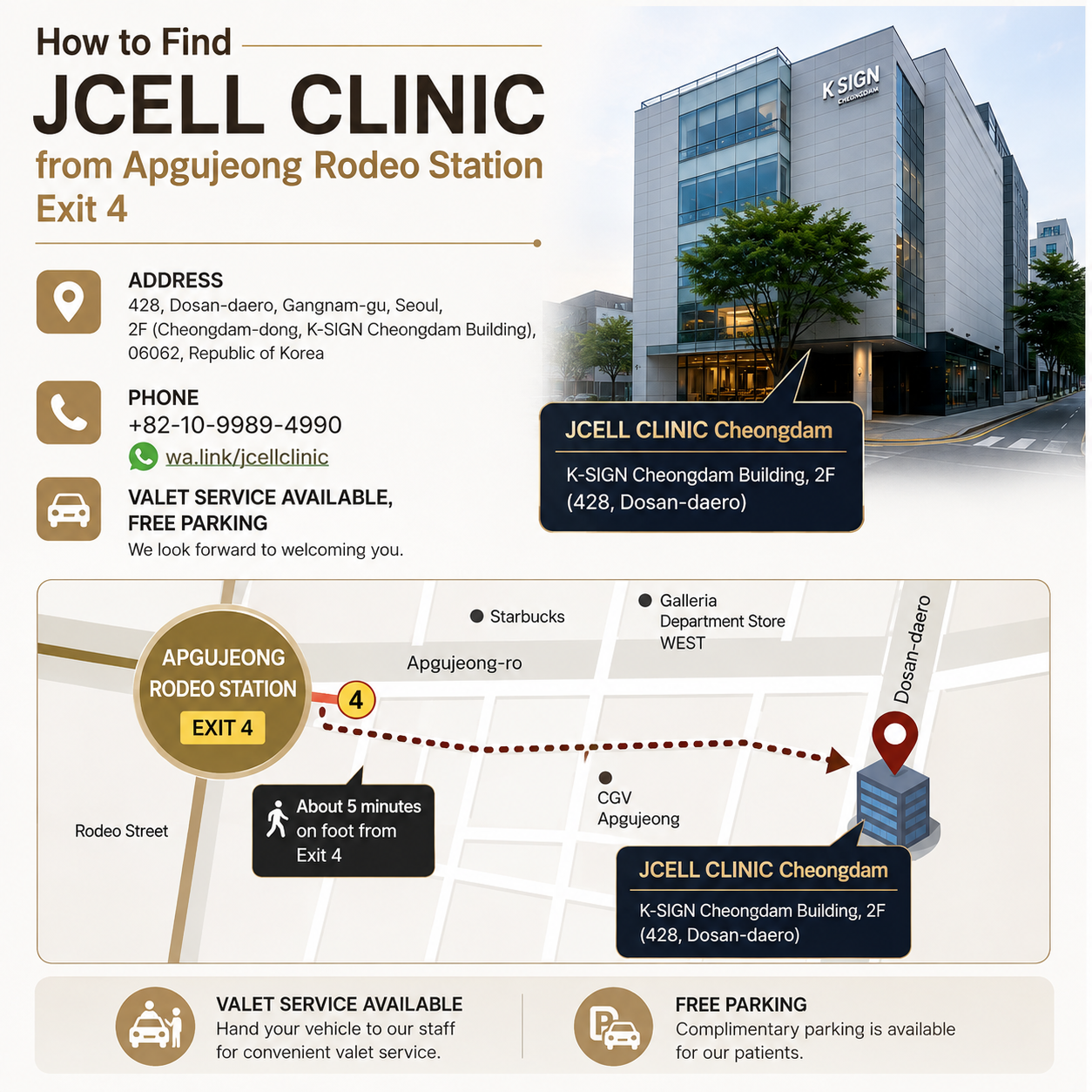
Cheongdam JCELL Dermatology Clinic is located in Cheongdam, Gangnam, Seoul, and offers Ultherapy Prime as part of its lifting treatment options.
For international visitors, an individualized consultation can help determine whether the visible sagging is primarily related to skin laxity or whether other factors should also be considered.
Frequently Asked Questions
What is Ultherapy for sagging skin?
Ultherapy is a non-surgical ultrasound treatment that uses focused energy to stimulate selected tissue layers beneath the skin. It is intended to improve the appearance of laxity and support gradual collagen remodeling.
Can Ultherapy tighten sagging facial skin?
It may improve the appearance of mild to moderate facial laxity when reduced skin firmness is an important contributor to sagging.
Can Ultherapy lift sagging cheeks?
Ultherapy may help improve the appearance of mild cheek laxity. The degree of improvement depends on the patient's skin condition and the cause of the sagging.
Can Ultherapy improve jowls?
It may help when early jowling is primarily associated with skin and tissue laxity. More advanced jowling with substantial excess skin may require another treatment approach.
Can Ultherapy tighten loose neck skin?
Ultherapy may be considered for appropriate degrees of neck laxity and is used for lifting lax tissue in the neck and beneath the chin.
Does Ultherapy remove sagging skin?
No. Ultherapy does not surgically remove excess skin. It uses focused ultrasound stimulation to support gradual tightening and collagen remodeling.
Can Ultherapy remove facial fat?
No. Ultherapy is primarily a skin-lifting treatment rather than a fat-removal procedure.
Is Ultherapy suitable for severe sagging?
It may have limited effectiveness when there is substantial excess skin or advanced tissue descent. Surgical lifting may be more appropriate in such cases.
Does Ultherapy hurt?
Patients may experience warmth, tingling, pressure, or brief pulses of discomfort. The experience varies depending on the individual and treatment area.
Is there downtime after Ultherapy?
Recovery is generally limited compared with surgery, although temporary redness, swelling, tenderness, sensitivity, or tingling can occur.
When will I see results?
Results develop progressively. Some patients may notice an early sense of firmness, while more gradual improvement occurs as collagen remodeling develops.
How long do Ultherapy results last?
The duration varies between individuals and depends on skin condition, age, treatment response, and ongoing aging.
How many Ultherapy treatments do I need?
There is no universal number. The appropriate treatment plan depends on the degree of laxity, treatment area, facial anatomy, and individual response.
Can Ultherapy replace a facelift?
No. A facelift can remove excess skin and reposition deeper tissue, while Ultherapy provides non-surgical ultrasound stimulation. They are different approaches.
Can Ultherapy be combined with other treatments?
Depending on the patient's condition, Ultherapy may be incorporated into a broader aesthetic treatment plan. The timing and suitability of other procedures should be evaluated individually.
Can international patients receive Ultherapy for sagging skin in Seoul?
Yes. International patients can consult a medical provider in Seoul to determine whether their skin laxity is appropriate for Ultherapy and discuss treatment timing around their travel schedule.
Can I receive Ultherapy at Cheongdam JCELL Dermatology Clinic?
Cheongdam JCELL Dermatology Clinic currently lists Ultherapy Prime among its lifting treatments and provides consultation for patients seeking non-surgical facial and skin tightening.
Ultherapy for Sagging Skin in Seoul
Ultherapy for Sagging Skin in Seoul can be considered for patients who want to improve mild to moderate skin laxity without undergoing surgery. Focused ultrasound energy stimulates selected tissue layers and supports a gradual collagen-remodeling response.
The treatment may be relevant to sagging cheeks, early jowling, a softer jawline, loose skin beneath the chin, and mild neck laxity. The most appropriate approach depends on whether skin laxity is the main cause of the patient's concern.
At
Cheongdam JCELL Dermatology Clinic, Ultherapy Prime treatment can be planned according to the patient's skin condition, facial anatomy, degree of sagging, and desired level of improvement. The clinic is located in
Cheongdam, Gangnam, Seoul, and provides non-surgical lifting options for both local and international patients.