Regenerative Dermatology in Gangnam, Seoul
Cheongdam JCELL Dermatology Clinic
Discover regenerative dermatology at Cheongdam JCELL Dermatology Clinic in Gangnam, Seoul, with personalized treatments focused on supporting skin renewal, improving texture and elasticity, and enhancing overall skin quality.
Regenerative dermatology focuses on improving the overall quality and condition of the skin rather than addressing only one visible concern. At Cheongdam JCELL Dermatology Clinic, regenerative approaches can be incorporated into personalized skin rejuvenation plans based on skin condition, treatment history, and individual goals.
Depending on the patient's needs, regenerative skin treatments may focus on hydration, elasticity, collagen support, skin density, fine lines, texture, radiance, and overall rejuvenation. The goal is to support healthier-looking skin while creating a treatment plan appropriate for the patient's individual condition.
What Is Regenerative Dermatology?
Regenerative dermatology is an approach to skin care that focuses on supporting the skin's natural regenerative processes and improving overall skin quality.
Rather than concentrating only on facial volume or isolated imperfections, regenerative treatments may address several aspects of skin health at the same time, including:
- Skin hydration
- Collagen support
- Elasticity
- Skin density
- Fine lines
- Uneven texture
- Radiance
- Overall skin quality
The specific treatment approach depends on the patient's skin condition and desired outcome.
Who May Consider Regenerative Skin Treatments?
Regenerative dermatology may be considered by patients who notice gradual changes in skin quality related to aging, environmental stress, dehydration, or reduced collagen and elasticity.
Patients may seek regenerative care when the skin appears:
- Dry or dehydrated
- Thin or less resilient
- Dull
- Rough
- Less elastic
- More prone to fine lines
- Less firm or dense
A dermatologist can evaluate whether regenerative treatment is appropriate or whether another dermatological or aesthetic approach would better address the patient's primary concern.
Regenerative Dermatology Treatments in Seoul
Regenerative skin care can involve different treatment approaches depending on the patient's condition. Rather than using one procedure for everyone, treatment can be selected according to the areas that need improvement.
Depending on individual needs, treatment goals may include:
- Skin hydration
- Collagen stimulation
- Skin-density improvement
- Elasticity support
- Texture improvement
- Fine-line care
- Skin rejuvenation
- Combination treatment
At Cheongdam JCELL Dermatology Clinic, regenerative and stem cell-related skin care is offered as part of a broader approach to skin rejuvenation and skin quality improvement.
Regenerative Treatment for Skin Quality
Skin quality involves more than the absence of pigmentation or wrinkles. Hydration, elasticity, texture, density, and overall skin resilience all contribute to how healthy and youthful the complexion appears.
Regenerative treatment may therefore be considered for patients who want to improve the overall condition of the skin rather than dramatically alter facial contours.
A personalized plan can address several skin-quality concerns together while maintaining a natural-looking appearance.
Regenerative Skin Treatments & Collagen
Collagen plays an important role in maintaining skin structure, firmness, and elasticity. As the skin ages, collagen production and skin resilience can gradually decrease, contributing to fine lines, reduced firmness, and changes in texture.
Some regenerative approaches are designed to support collagen-related processes and improve the appearance of skin quality over time. The appropriate treatment depends on the patient's age, skin condition, degree of collagen loss, and treatment goals.
Regenerative care can therefore be incorporated into a broader anti-aging strategy rather than being viewed as a treatment for one isolated wrinkle.
Regenerative Treatments for Hydration & Elasticity
Dehydrated skin can appear dull, rough, tight, or less supple, while reduced elasticity can make the skin appear thinner or less firm.
Regenerative skin treatments may be considered when patients want to improve both hydration and elasticity as part of an overall skin-quality program.
Treatment goals may include:
- Improved skin moisture
- Smoother-looking texture
- Better skin suppleness
- Improved elasticity
- Healthier-looking radiance
The appropriate treatment should be selected according to the patient's current skin condition and sensitivity.
Regenerative Treatments for Fine Lines & Texture
Fine lines and uneven texture can become more noticeable as collagen, hydration, and elasticity decrease. Environmental exposure and repeated inflammation can also affect the appearance of skin texture.
Regenerative approaches may be considered to support overall skin quality and create a smoother-looking complexion. Patients with more pronounced structural changes may benefit from combining regenerative care with other dermatological treatments when appropriate.
The treatment plan can therefore be adjusted according to whether the primary concern is fine lines, roughness, elasticity, or a combination of factors.
Regenerative Dermatology & Anti-Aging
Regenerative dermatology can form part of a broader medical anti-aging strategy. Rather than focusing only on wrinkles or facial volume, the approach considers the overall condition of aging skin.
Anti-aging concerns that may be addressed include:
- Fine lines
- Wrinkles
- Reduced elasticity
- Skin laxity
- Dryness
- Uneven texture
- Dullness
- Changes in skin density
At Cheongdam JCELL Dermatology Clinic, rejuvenation and anti-aging approaches are customized according to individual skin condition and desired results, with the goal of supporting naturally rejuvenated-looking skin.
Regenerative Dermatology in Cheongdam, Seoul
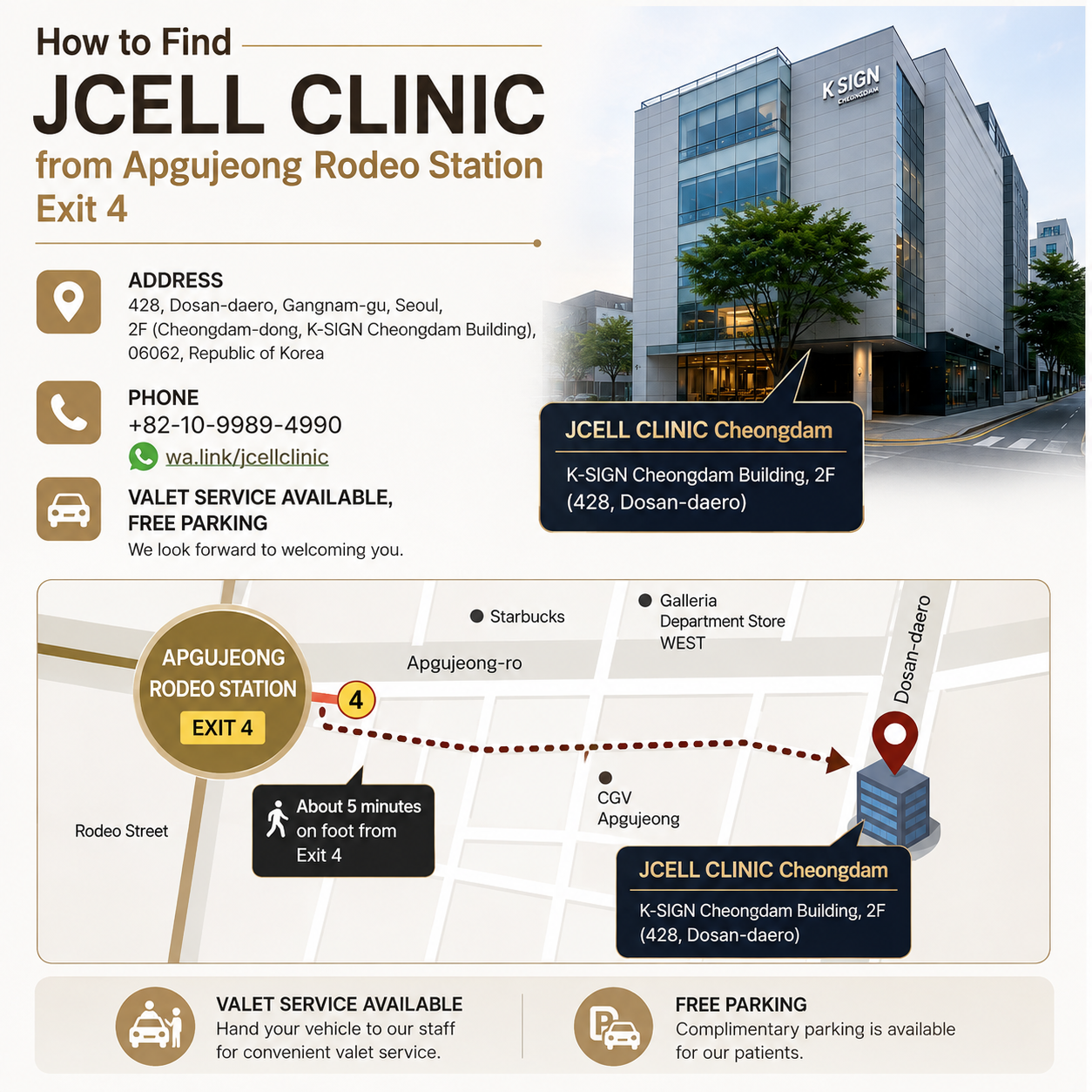
Cheongdam is located in Gangnam, Seoul, and is known for access to specialized dermatology and aesthetic medical care. For patients seeking regenerative dermatology, the treatment approach can be planned around their specific skin concerns rather than a standardized procedure.
Patients may seek regenerative skin care for:
- Overall skin rejuvenation
- Skin quality improvement
- Collagen support
- Hydration
- Elasticity
- Texture
- Early signs of aging
Cheongdam JCELL Dermatology Clinic provides personalized dermatology and aesthetic care for both local and international patients seeking skin rejuvenation and regenerative approaches.
Regenerative Dermatology Process in Seoul
1. Dermatologist Consultation
The dermatologist discusses the patient's primary concerns, skin history, previous procedures, skincare routine, and desired outcome.
2. Skin Quality Evaluation
The skin is evaluated for hydration, elasticity, texture, density, fine lines, radiance, sensitivity, and other factors affecting overall skin quality.
3. Personalized Treatment Planning
Based on the evaluation, regenerative or skin-rejuvenation treatments may be recommended according to the patient's individual needs. Treatment can also be combined with other dermatological procedures when appropriate.
4. Follow-Up Care
Skin quality changes gradually, so follow-up can help evaluate the response and determine whether treatment intensity, timing, or additional care should be adjusted.
Regenerative Treatment Results & Recovery
Results vary according to the treatment selected, the patient's skin condition, treatment goals, and individual response. Regenerative approaches generally focus on gradual improvements in skin quality rather than an immediate change in facial shape.
Depending on the procedure, patients may experience temporary redness, swelling, sensitivity, dryness, or mild discomfort. Recovery time varies according to the specific treatment.
Patients should follow their dermatologist's aftercare instructions and maintain appropriate sun protection and skincare throughout the recovery period.
Frequently Asked Questions
What is regenerative dermatology?
Regenerative dermatology is an approach focused on supporting skin regeneration and improving overall skin quality, including hydration, elasticity, collagen support, density, texture, and radiance.
What skin concerns can regenerative dermatology address?
Regenerative approaches may be considered for dehydration, fine lines, reduced elasticity, rough texture, reduced skin density, dullness, and general signs of skin aging.
Does regenerative dermatology stimulate collagen?
Some regenerative skin treatments are designed to support collagen-related processes. The expected effect depends on the specific treatment, product, technique, and individual skin response.
**Is regenerative dermatology the same as dermal filler?
No. Traditional dermal fillers are primarily used to add volume or enhance facial contours, while regenerative approaches generally focus more on improving skin quality and supporting healthier-looking skin.
Can regenerative treatments improve skin texture?
They may help improve the appearance of skin texture depending on the treatment and the patient's underlying skin condition. Patients with significant structural scarring may require additional procedures specifically designed for acne scars or resurfacing.
Can regenerative dermatology help with fine lines?
Regenerative skin treatments may improve the appearance of fine lines by supporting skin hydration, elasticity, and overall skin quality. Deeper wrinkles may require additional anti-aging treatments.
Can regenerative treatments improve dry skin?
Certain regenerative and skin-quality treatments may support hydration and improve the appearance of dry or dehydrated skin. Appropriate home skincare and barrier care remain important as well.
How many regenerative treatments are needed?
The number and frequency of treatments depend on the specific procedure, skin condition, treatment goals, and individual response. A dermatologist can recommend an appropriate treatment plan after evaluation.
Is there downtime after regenerative dermatology treatments?
Recovery varies according to the treatment. Some procedures may cause temporary redness, swelling, sensitivity, or mild discomfort, while others may involve minimal downtime.
Are regenerative treatments suitable for aging skin?
They may be considered as part of an individualized anti-aging plan for concerns such as fine lines, reduced elasticity, dryness, changes in skin density, and uneven texture.
Can international patients receive regenerative dermatology treatment in Seoul?
Yes. International patients living in Korea or visiting Seoul can receive personalized dermatological consultation and regenerative skin care in Cheongdam. Previous treatment history and current skincare should be discussed during consultation.
Regenerative Dermatology in Seoul, Korea
Regenerative Dermatology in Seoul focuses on improving overall skin quality through personalized approaches targeting hydration, elasticity, collagen support, skin density, texture, fine lines, radiance, and overall rejuvenation. Cheongdam JCELL Dermatology Clinic provides regenerative and stem cell-related skin care as part of its broader approach to personalized skin rejuvenation and skin-quality improvement.
Rather than focusing only on one visible concern, regenerative dermatology can be incorporated into a broader treatment strategy according to the patient's individual skin condition, previous treatments, and aesthetic goals. Treatment may be combined with other dermatological or skin-rejuvenation procedures when appropriate.
For patients searching for
Regenerative Dermatology in Seoul,
Regenerative Skin Treatments in Seoul, or
Regenerative Dermatology in Cheongdam, a personalized dermatological consultation can help determine which approach is appropriate for the individual's skin quality and rejuvenation goals.