Non-Surgical Facelift in Gangnam, Seoul
Cheongdam JCELL Dermatology Clinic
Discover non-surgical facial lifting at Cheongdam JCELL Dermatology Clinic in Gangnam, Seoul, with personalized treatments designed to improve firmness, refine contours, and create a naturally refreshed appearance.
A non-surgical facelift is an aesthetic treatment approach designed to improve facial sagging, skin laxity, reduced firmness, and changes in facial contours without traditional facelift surgery. Instead of removing excess skin through an incision, non-surgical treatments may use energy-based technologies, collagen stimulation, or minimally invasive procedures to create gradual facial rejuvenation.
At Cheongdam JCELL Dermatology Clinic, non-surgical facelift treatments are planned according to each patient's facial structure, degree of skin laxity, skin quality, facial volume, and aesthetic goals. Different treatments may be used individually or combined when appropriate to address multiple aspects of facial aging.
For international patients living in Korea or visiting Seoul, a professional consultation can help determine whether a non-surgical facelift approach is suitable and which treatment strategy may provide the most balanced result.
What Is a Non-Surgical Facelift?
A non-surgical facelift refers to a customized approach to facial rejuvenation that aims to improve the appearance of sagging and aging without conventional facelift surgery.
Rather than making incisions or surgically removing excess skin, non-surgical treatments may work by:
- Tightening loose skin
- Stimulating collagen production
- Improving skin elasticity
- Supporting facial contours
- Reducing the appearance of mild sagging
- Improving overall skin quality
Depending on the patient's needs, a non-surgical facelift may involve ultrasound-based lifting, radiofrequency, laser lifting, collagen-stimulating treatments, or selected minimally invasive procedures.
Some treatment plans may address the skin surface, while others target deeper tissue layers.
A non-surgical facelift is not one specific procedure. It is a treatment concept that can include different technologies and techniques depending on the patient's individual concerns.
The appropriate approach depends on whether the primary issue involves skin laxity, collagen loss, volume changes, localized fullness, or several factors at the same time.
How Facial Aging Changes the Face
Facial aging is a gradual process involving multiple layers of the face.
Collagen and elastin production decrease over time, which can contribute to reduced skin firmness and elasticity. Changes in facial fat distribution and supporting structures can also influence the appearance of facial contours.
Common signs of facial aging include:
- Sagging cheeks
- Less defined jawline
- Mild jowling
- Nasolabial folds
- Marionette lines
- Fine lines
- Reduced skin elasticity
- Double chin appearance
- Loose neck skin
- Overall loss of facial definition
Sun exposure and lifestyle factors may also contribute to visible aging.
These can include:
- Repeated ultraviolet exposure
- Smoking
- Weight fluctuations
- Environmental stress
- Chronic stress
- Lifestyle-related factors
However, facial aging is different for every person.
One patient may mainly have loose skin, while another may have volume loss or localized fat that changes the appearance of the lower face.
This is why a non-surgical facelift should begin with an assessment of the underlying causes of facial aging rather than simply treating visible wrinkles or sagging.
Who May Consider a Non-Surgical Facelift?
A non-surgical facelift may be considered by patients who want to improve facial aging without undergoing traditional facelift surgery.
Potential concerns include:
- Mild to moderate skin laxity
- Sagging cheeks
- Less defined jawline
- Early jowls
- Fine lines
- Reduced elasticity
- Double chin appearance
- Mild neck laxity
- Loss of facial firmness
- General signs of aging
Some patients seek treatment as they begin to notice early changes in their facial contours.
Others may already have visible sagging but prefer a gradual, non-surgical approach.
Non-surgical procedures are generally better suited to patients with mild to moderate changes.
Patients with significant excess skin should understand that non-surgical treatments cannot physically remove large amounts of loose skin in the same way as surgery.
Realistic expectations are therefore an important part of deciding whether a non-surgical facelift is appropriate.
Non-Surgical Facelift Treatment Options in Cheongdam
A non-surgical facelift can involve different treatment technologies depending on the patient's condition.
At Cheongdam JCELL Dermatology Clinic, treatment planning may consider approaches such as:
- Advanced laser lifting
- Ultrasound-based lifting
- Radiofrequency-based tightening
- Collagen stimulation
- Regenerative skin treatments
- Thread lifting
- Combination lifting programs
Different technologies work at different depths and through different mechanisms.
Energy-Based Lifting
Energy-based procedures use controlled energy to stimulate tissue remodeling and improve skin firmness.
Depending on the technology, treatment may target:
- Surface skin quality
- Dermal collagen
- Deeper tissue layers
- Facial contours
These treatments can be useful for patients who want gradual improvement with relatively limited downtime.
Thread Lifting
Selected patients may consider thread lifting when more direct mechanical support of sagging tissue is desired.
Thread-based procedures differ from energy-based lifting because they can provide physical support to selected areas of sagging tissue.
They may be considered for areas such as:
- Cheeks
- Jawline
- Lower face
- Corners of the mouth
The suitability of thread lifting depends on skin laxity, facial structure, tissue characteristics, and the patient's desired degree of correction.
Combination Approaches
Some patients have several signs of facial aging at once.
A customized treatment plan may therefore combine different approaches to address:
- Skin laxity
- Collagen loss
- Reduced skin quality
- Facial contour changes
- Volume concerns
Combination treatment should be based on individual needs rather than adding procedures simply to create a more intensive treatment plan.
Which Areas Can a Non-Surgical Facelift Treat?
Facial aging can affect different areas at different times.
Cheeks
Sagging cheeks can make the middle and lower face appear heavier.
Lifting treatments may focus on improving firmness and supporting a more defined facial contour.
Jawline
A less defined jawline is a common concern associated with facial aging.
Treatment may focus on:
- Lower-face firmness
- Mild jowls
- Jawline definition
- Overall facial contour
Nasolabial and Marionette Areas
Changes in skin elasticity and facial volume can make folds around the nose and mouth more noticeable.
A non-surgical facelift may improve the surrounding skin and contours, although deeper folds may involve more than skin laxity alone.
Double Chin
A double chin can result from localized fat, loose skin, facial anatomy, or a combination of factors.
When skin laxity is a major contributor, tightening treatments may improve the appearance.
However, significant fat accumulation may require a different contouring approach.
Neck
The neck can develop reduced firmness and fine lines as collagen and elasticity decline.
Depending on the condition, treatment may focus on:
- Neck firmness
- Mild laxity
- Fine lines
- Overall skin quality
Treatment should be selected according to the specific anatomy and aging pattern of each area.
Personalized Non-Surgical Facelift at Cheongdam JCELL Dermatology Clinic
At Cheongdam JCELL Dermatology Clinic, non-surgical facelift planning begins with an assessment of the patient's facial structure and skin condition.
The medical team may consider:
- Degree of skin laxity
- Skin thickness
- Elasticity
- Facial proportions
- Jawline definition
- Facial volume
- Fat distribution
- Skin quality
- Age-related changes
- Previous procedures
- Skin sensitivity
- Desired outcome
Two patients may have similar-looking facial sagging while requiring different treatments.
For example, one patient may primarily have loose skin and collagen loss.
Another may have volume loss or localized fullness affecting the facial contour.
A third patient may have more significant tissue laxity that requires a different level of intervention.
Lifting vs. Volume Correction
Facial aging is not always caused by loose skin.
Volume loss can make certain areas look hollow while causing surrounding tissue to appear less supported.
Likewise, localized facial fat can make the lower face appear heavier even when skin laxity is relatively mild.
During assessment, the dermatologist may consider whether the patient's concerns are related to:
- Skin laxity
- Collagen loss
- Volume loss
- Localized fat
- Facial structure
- Reduced elasticity
- Multiple aging factors
Understanding these differences helps create a treatment plan that improves facial balance rather than simply tightening every area.
Benefits of a Non-Surgical Facelift
Patients often consider a non-surgical facelift because they want facial rejuvenation without the recovery associated with conventional surgery.
Potential benefits can include:
- Improved appearance of mild sagging
- Better skin firmness
- More defined facial contours
- Improved elasticity
- Collagen stimulation
- Gradual rejuvenation
- Less invasive treatment
- Limited downtime for many procedures
The actual benefits depend on the treatment selected.
Energy-based lifting may primarily improve firmness and collagen remodeling.
Thread lifting may provide more direct support to selected sagging areas.
Regenerative or skin-quality treatments may focus more on improving elasticity and overall skin condition.
The expected result should always be discussed according to the specific procedure rather than the general term "non-surgical facelift."
What Happens During a Non-Surgical Facelift?
The treatment process varies depending on the procedures included in the personalized plan.
A typical visit may involve:
1. Consultation
Your concerns, previous treatments, medical history, and aesthetic goals are discussed.
2. Facial Assessment
The dermatologist evaluates facial contours, skin laxity, elasticity, volume distribution, and areas of concern.
3. Treatment Planning
The appropriate technologies or procedures are selected based on the assessment.
4. Non-Surgical Facelift Treatment
The selected procedure is performed according to the treatment plan.
Patients may experience warmth, tingling, pressure, or temporary discomfort during some energy-based procedures.
Thread lifting may involve a different treatment experience and recovery period.
5. Aftercare
Patients receive guidance regarding skincare, sun protection, heat exposure, activity restrictions, and other precautions when necessary.
The total appointment time depends on the procedures and treatment areas involved.
Recovery and Downtime
One of the reasons patients consider a non-surgical facelift is the possibility of shorter recovery compared with conventional surgery.
However, downtime varies considerably depending on the treatment.
Energy-based procedures may cause temporary:
- Redness
- Warmth
- Swelling
- Tenderness
- Sensitivity
- Tightness
More minimally invasive procedures may involve additional temporary effects.
Thread lifting, for example, can involve swelling, bruising, tenderness, or temporary changes in facial movement and sensation during recovery.
Patients should therefore ask about the expected recovery associated with the specific procedure being considered.
After treatment, general recommendations may include:
- Using gentle skincare
- Keeping the skin moisturized
- Avoiding unnecessary rubbing
- Limiting excessive heat
- Protecting the skin from sunlight
- Following treatment-specific aftercare instructions
Minimal downtime does not mean zero recovery, and patients should plan according to the actual procedure selected.
How Long Do Non-Surgical Facelift Results Last?
The duration of results varies according to the treatment method, degree of aging, skin condition, and individual response.
Some procedures create gradual collagen-related changes that develop over time.
Other treatments can provide more immediate contour changes followed by additional improvement as tissue remodeling occurs.
Factors that can influence longevity include:
- Treatment technology
- Treatment intensity
- Degree of skin laxity
- Age
- Skin quality
- Lifestyle
- Sun exposure
- Individual collagen response
Facial aging also continues naturally after treatment.
This means that even when a treatment produces a noticeable improvement, the skin will continue to change over time.
Maintenance treatments may therefore be considered according to individual goals.
There is no single timeline that applies to every non-surgical facelift treatment.
Natural-Looking Facial Rejuvenation
Many patients choosing a non-surgical facelift want to look refreshed rather than significantly different.
They may want:
- Firmer-looking skin
- Better facial definition
- A smoother appearance
- Less visible sagging
- A more youthful but natural appearance
Treatment should therefore be proportional to the patient's existing facial structure.
Over-correction can sometimes make facial contours appear unnatural.
A personalized plan may instead focus on subtle improvements in areas where aging is most noticeable.
This can involve treating only selected areas rather than applying the same treatment to the entire face.
The goal of natural-looking rejuvenation is to improve the signs of aging while preserving the patient's individual facial characteristics.
Non-Surgical Facelift for International Patients in Seoul
International patients may consider a non-surgical facelift while visiting Seoul for aesthetic and dermatology treatments.
At Cheongdam JCELL Dermatology Clinic, patients can discuss concerns such as:
- Facial sagging
- Reduced firmness
- Sagging cheeks
- Jawline definition
- Jowls
- Fine lines
- Double chin appearance
- Neck laxity
- Reduced elasticity
- Overall facial aging
During consultation, international patients can also discuss:
- Treatment options
- Expected results
- Treatment duration
- Possible discomfort
- Downtime
- Aftercare
- Recommended treatment intervals
- Follow-up requirements
Travel plans should be considered when scheduling treatment.
Patients with limited time in Seoul may want to understand the expected recovery period before undergoing treatment.
If you have important photographs, events, or extensive outdoor activities planned, allowing adequate recovery time can be helpful.
When Should You Consider a Non-Surgical Facelift?
A professional consultation may be appropriate if you are beginning to notice changes in facial firmness or definition but do not want traditional facelift surgery.
You may consider an evaluation if you:
- Notice mild facial sagging
- Have less defined jawlines
- See early jowls
- Have sagging cheeks
- Notice reduced skin elasticity
- Have fine lines associated with skin laxity
- Are concerned about a developing double chin
- Want to improve facial contours without surgery
- Prefer gradual rejuvenation
- Want a personalized anti-aging treatment plan
Patients with significant excess skin should also discuss whether non-surgical treatment can realistically achieve their desired outcome.
In some cases, the degree of laxity may be beyond what non-surgical treatment can adequately correct.
A consultation is the best way to determine whether a non-surgical facelift matches the patient's anatomy and expectations.
Why Choose Cheongdam for Non-Surgical Facelift Treatment?
Cheongdam is located in Gangnam, Seoul, and is well known for its concentration of dermatology, plastic surgery, and aesthetic medical services.
The area is convenient for both Korean residents and international visitors seeking professional facial rejuvenation.
Patients staying in nearby areas can access Cheongdam from:
- Gangnam
- Apgujeong
- Sinsa
- COEX
- Samseong
- Seongsu
- Jamsil
- Itaewon
- Central Seoul
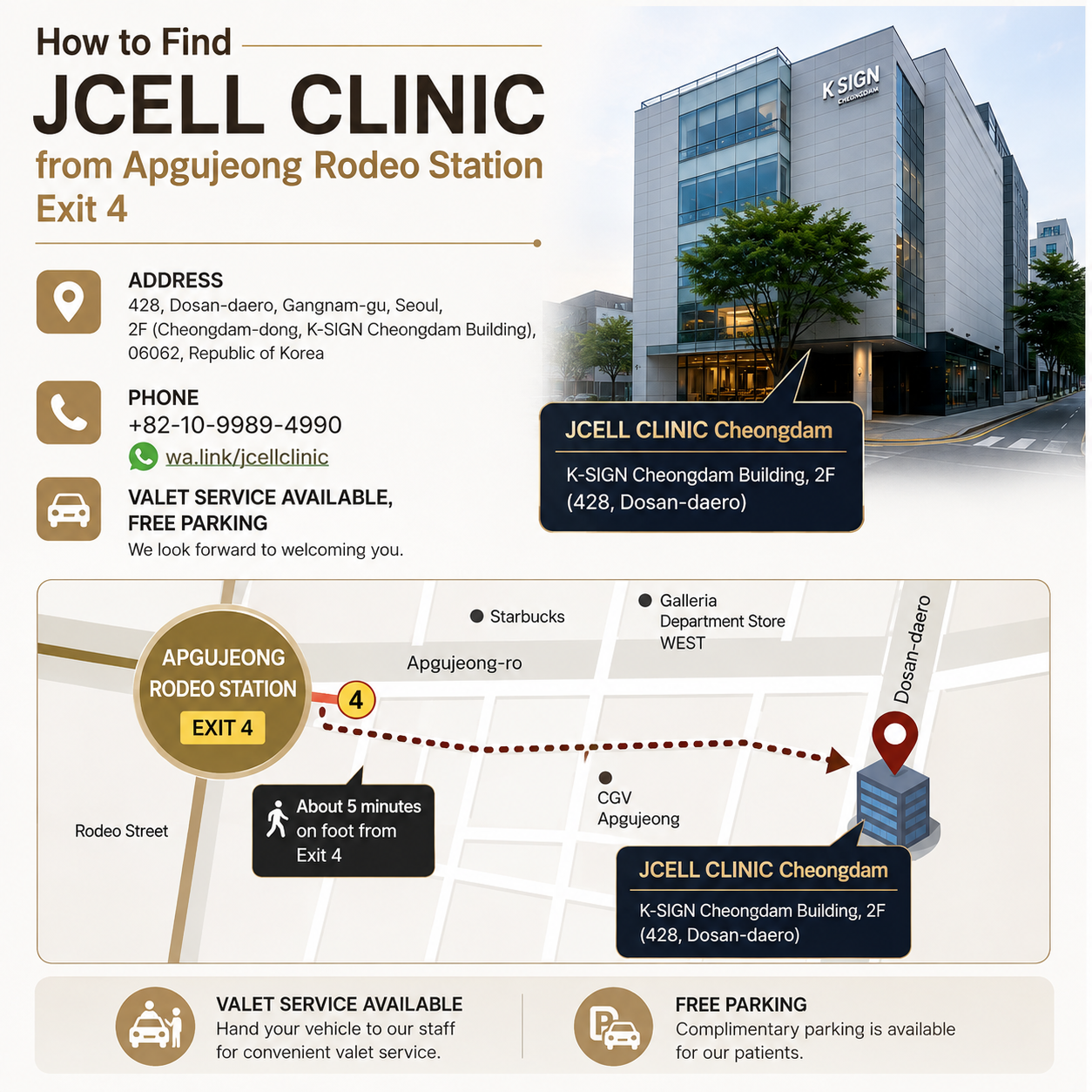
Cheongdam JCELL Dermatology Clinic is located at 428 Dosan-daero in Gangnam, near Apgujeong Rodeo Station Exit 4.
This location provides convenient access for patients traveling within Seoul for dermatology and aesthetic treatments.
Frequently Asked Questions
What is a non-surgical facelift?
A non-surgical facelift is a customized facial rejuvenation approach that aims to improve sagging, skin laxity, firmness, and facial contours without traditional facelift surgery. It may involve energy-based treatments, collagen stimulation, or selected minimally invasive procedures.
Who is a good candidate for a non-surgical facelift?
Patients with mild to moderate skin laxity, reduced firmness, early facial sagging, or changes in facial definition may consider non-surgical treatment. A consultation is important to determine whether the expected results are realistic.
What treatments can be included in a non-surgical facelift?
Depending on the patient's needs, treatment may include ultrasound-based lifting, radiofrequency, laser lifting, collagen-stimulating procedures, regenerative treatments, thread lifting, or customized combinations.
Can a non-surgical facelift treat sagging cheeks?
Yes. Selected non-surgical lifting treatments may improve the appearance of mild cheek laxity and support a more defined facial contour. The appropriate approach depends on the degree and cause of the sagging.
Can a non-surgical facelift improve the jawline?
It may improve jawline definition when skin laxity contributes to a less defined contour. If localized fat or facial anatomy is a major factor, another treatment approach may be more appropriate.
Is a non-surgical facelift painful?
The level of discomfort depends on the specific procedure. Energy-based treatments may cause warmth, tingling, or pressure, while minimally invasive procedures can involve different sensations and recovery requirements.
How much downtime is required?
Downtime varies by treatment. Some energy-based procedures involve limited downtime, while thread lifting or other minimally invasive procedures may cause swelling, bruising, or tenderness during recovery.
How long do the results last?
The duration varies according to the treatment, skin condition, age, lifestyle, and individual response. Maintenance treatment may be considered as natural aging continues.
Can a non-surgical facelift replace a surgical facelift?
Non-surgical treatments can improve selected degrees of sagging but cannot remove significant excess skin in the same way as surgery. Patients with advanced laxity should discuss realistic options during consultation.
Can I get a non-surgical facelift while visiting Seoul?
Yes. International visitors can seek non-surgical facial rejuvenation in Seoul. Treatment timing should take the procedure's expected recovery and the patient's travel itinerary into consideration.
Can foreigners receive non-surgical facelift treatment in Cheongdam?
Yes. International residents and visitors can receive personalized consultation and aesthetic treatment at Cheongdam JCELL Dermatology Clinic in Cheongdam, Gangnam.
Non-Surgical Facelift in Cheongdam, Gangnam
Cheongdam JCELL Dermatology Clinic provides personalized facial rejuvenation care for patients seeking a non-surgical facelift in Cheongdam. Treatment may address facial sagging, reduced firmness, early jowls, less defined jawlines, cheek laxity, fine lines, double chin appearance, and age-related changes in skin quality.
Depending on the patient's facial structure and skin condition, energy-based lifting, collagen stimulation, regenerative treatments, thread lifting, or a customized combination approach may be considered. For international patients living in Korea or visiting Seoul,
Cheongdam JCELL Dermatology Clinic offers professional consultation and individualized treatment planning in
Cheongdam, Gangnam.